Fall Prevention Equipment Starts in the Chair, Not the Corridor
When we talk about falls in aged care, the conversation almost always begins with walking — how residents move through corridors, how steady they are on their feet, and what happens once they’re already in motion. There’s a strong focus on gait, mobility aids, flooring, and supervision. But in day-to-day practice, the reality is more nuanced.
Many falls don’t start with a step.
They start before the resident is even upright.
The Moment Many Overlook
In a typical day, this moment happens dozens — if not hundreds — of times across a facility, yet it rarely gets the same level of attention as walking or transfers. A resident sits in a chair, leans forward, and prepares to stand. It seems simple, but it’s often the point where things begin to unravel.
A resident shifts forward. They try to push up. Their weight transfers unevenly. Their centre of gravity moves. Their confidence wavers.
That moment — the sit-to-stand transition — is one of the most biomechanically demanding movements an older person performs.
It requires:
- Lower limb strength
- Core stability
- Joint range of motion
- Balance and coordination
- Confidence and timing
When even one of these is compromised (and in aged care, that’s common), the risk escalates quickly.
This is where many falls begin.
Why Sit-to-Stand Is a High-Risk Movement
Standing up from a seated position might look routine, but it brings together multiple physical demands at once — and in aged care environments, those demands are often sitting right at the edge of a resident’s capability. Small limitations can quickly compound into instability.
From a practical standpoint, sit-to-stand combines multiple risk factors:
- Forward weight shift increases instability
- Reduced quadriceps strength limits lift-off power
- Poor chair height or depth forces unsafe positioning
- Armrests that don’t support push-off reduce control
- Fatigue leads to rushed or incomplete movements
For residents, this often looks like:
- Multiple attempts to stand
- “Rocking” forward to gain momentum
- Grabbing nearby furniture
- Calling for assistance (or worse — not calling)
For staff, it becomes:
- A manual handling task
- A reactive assist rather than a controlled intervention
- A repeated strain on time and physical resources
Fall Prevention Equipment: Are We Missing a Category?
When facilities review or invest in fall prevention equipment, the focus is typically on managing known risks once a resident is already moving or after a fall has occurred. These solutions are important — but they often sit downstream of the real problem.
Most commonly, fall prevention equipment includes:
- Sensor mats
- Low-low beds
- Hip protectors
- Non-slip flooring
- Mobility aids like walkers
These all play a role.
But they’re largely reactive — designed to respond to risk rather than prevent it at the earliest point.
What’s often missing is equipment that addresses the transition into movement.
That gap matters.
Because if a resident cannot stand safely, everything that follows becomes higher risk.
The Role of Seating in Falls Prevention
Seating is one of the most constant touchpoints in a resident’s day, yet it’s rarely considered part of a broader falls strategy. Chairs are often selected for comfort, aesthetics, or cost — not for how they influence movement.
From a practical perspective, the right chair can:
- Optimise hip and knee positioning for safer standing
- Provide stable arm support for controlled push-off
- Reduce the effort required to stand
- Minimise fatigue-related risk
- Support confidence and independence
And importantly, it can reduce the need for hands-on assistance, lowering manual handling exposure for staff.
A Small Change With Measurable Impact
Large-scale initiatives often dominate falls prevention strategies — new systems, new protocols, new layers of monitoring. While these have their place, smaller, targeted changes are often where meaningful improvements start to show up in daily operations.
Improving how a resident stands up can:
- Reduce near-miss incidents
- Increase resident confidence
- Decrease reliance on staff assistance
- Support more consistent mobility throughout the day
It’s not dramatic. It’s not high-tech.
But it’s effective.
Rethinking Your Falls Strategy
A comprehensive falls strategy isn’t just about responding to incidents — it’s about identifying where risk is introduced in the first place. That requires stepping back and looking at everyday movements through a different lens.
If you’re reviewing your approach to fall prevention equipment, it’s worth asking:
- Are we only focusing on movement after standing?
- Are we overlooking the highest-risk transition point?
- Is our seating helping — or hindering — safe movement?
- How often are staff assisting with sit-to-stand throughout the day?
Because every assisted stand is:
- A potential risk moment
- A resource demand
- An opportunity for improvement
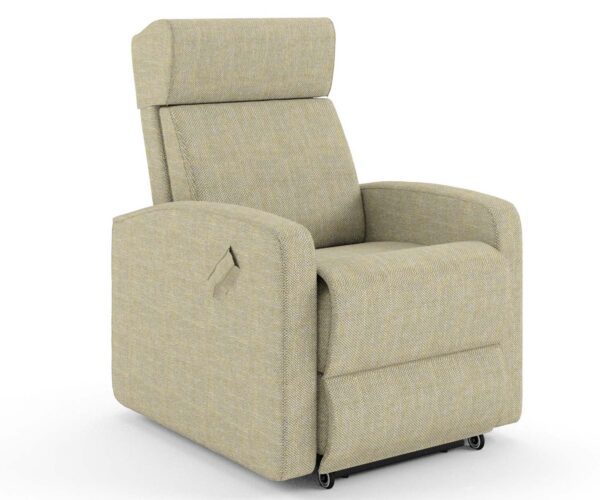
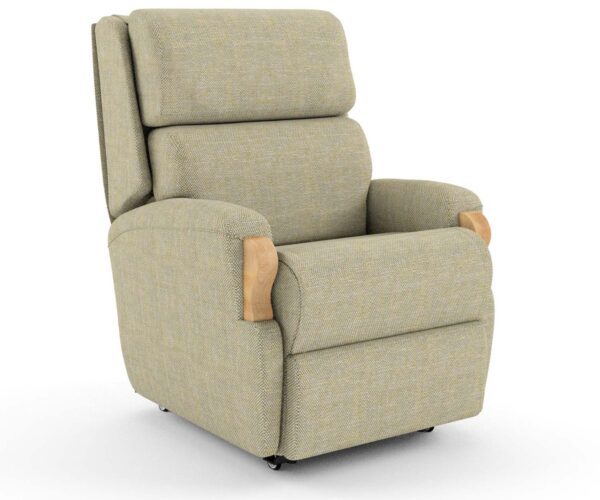
Where the Slimline Electric Recliner Fits
There’s a growing recognition that furniture can play a more active role in supporting care outcomes, rather than simply being part of the environment. This is where fit-for-purpose seating starts to shift from a “nice to have” to something far more strategic.
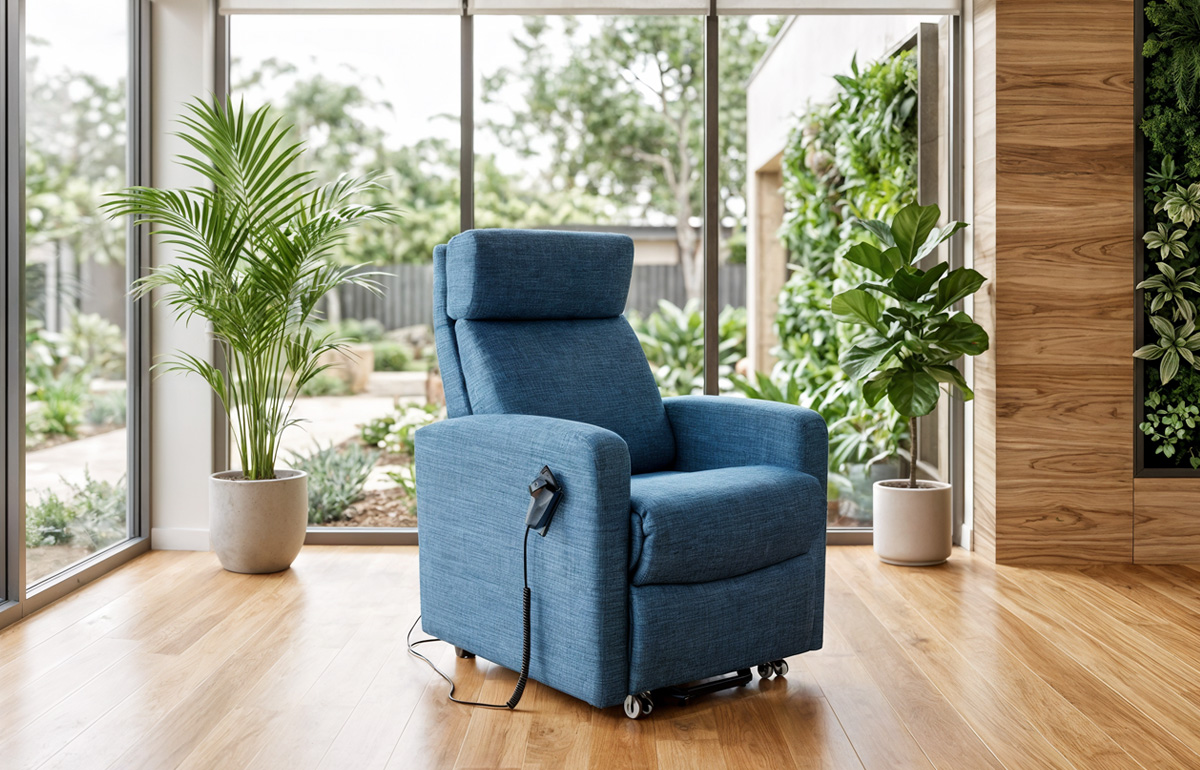
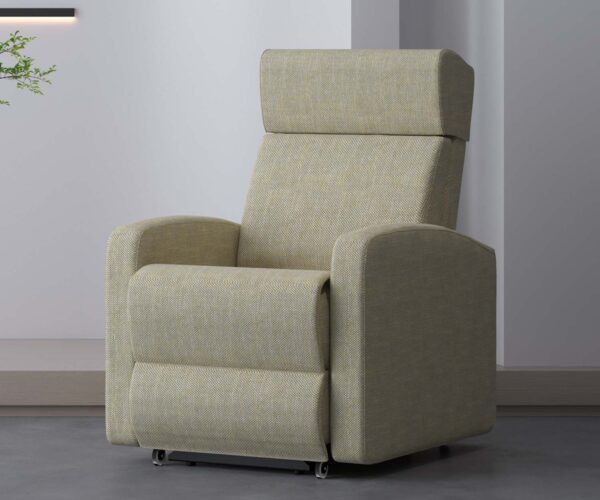
The Slimline Electric Recliner is designed to:
- Support a controlled sit-to-stand transition
- Reduce the physical effort required to stand
- Promote safer, more consistent movement patterns
- Help residents maintain a level of independence
In the context of fall prevention equipment, it addresses something many solutions don’t:
The moment before the first step.
Final Thought
Falls prevention is often approached as something that happens once a resident is up and moving, but by that point, the risk has already been set in motion. The earlier that risk is addressed, the more effective the outcome.
It starts earlier — in the chair, in the setup, in the transition.
When we shift our focus to that moment, we open up new opportunities to reduce risk in a practical, measurable way.
And often, it’s the simplest changes that make the biggest difference.
👉 Want to take a closer look?
Explore how the Slimline Electric Recliner supports safer mobility and fits within a broader fall prevention strategy on our website.
Fit-For-Purpose Australian Made Aged Care Furniture
Recent Updates
Fall Prevention Equipment Starts in the Chair, Not the Corridor
When we talk about falls in aged care, the conversation almost always begins with walking — how residents move through corridors, how steady they are on their feet, and what happens once they’re already in motion. There’s a strong focus on gait, mobility aids, flooring, and supervision. But in day-to-day practice, the reality is more nuanced.
Many falls don’t start with a step.
They start before the resident is even upright.
The Moment Many Overlook
In a typical day, this moment happens dozens — if not hundreds — of times across a facility, yet it rarely gets the same level of attention as walking or transfers. A resident sits in a chair, leans forward, and prepares to stand. It seems simple, but it’s often the point where things begin to unravel.
A resident shifts forward. They try to push up. Their weight transfers unevenly. Their centre of gravity moves. Their confidence wavers.
That moment — the sit-to-stand transition — is one of the most biomechanically demanding movements an older person performs.
It requires:
- Lower limb strength
- Core stability
- Joint range of motion
- Balance and coordination
- Confidence and timing
When even one of these is compromised (and in aged care, that’s common), the risk escalates quickly.
This is where many falls begin.
Why Sit-to-Stand Is a High-Risk Movement
Standing up from a seated position might look routine, but it brings together multiple physical demands at once — and in aged care environments, those demands are often sitting right at the edge of a resident’s capability. Small limitations can quickly compound into instability.
From a practical standpoint, sit-to-stand combines multiple risk factors:
- Forward weight shift increases instability
- Reduced quadriceps strength limits lift-off power
- Poor chair height or depth forces unsafe positioning
- Armrests that don’t support push-off reduce control
- Fatigue leads to rushed or incomplete movements
For residents, this often looks like:
- Multiple attempts to stand
- “Rocking” forward to gain momentum
- Grabbing nearby furniture
- Calling for assistance (or worse — not calling)
For staff, it becomes:
- A manual handling task
- A reactive assist rather than a controlled intervention
- A repeated strain on time and physical resources
Fall Prevention Equipment: Are We Missing a Category?
When facilities review or invest in fall prevention equipment, the focus is typically on managing known risks once a resident is already moving or after a fall has occurred. These solutions are important — but they often sit downstream of the real problem.
Most commonly, fall prevention equipment includes:
- Sensor mats
- Low-low beds
- Hip protectors
- Non-slip flooring
- Mobility aids like walkers
These all play a role.
But they’re largely reactive — designed to respond to risk rather than prevent it at the earliest point.
What’s often missing is equipment that addresses the transition into movement.
That gap matters.
Because if a resident cannot stand safely, everything that follows becomes higher risk.
The Role of Seating in Falls Prevention
Seating is one of the most constant touchpoints in a resident’s day, yet it’s rarely considered part of a broader falls strategy. Chairs are often selected for comfort, aesthetics, or cost — not for how they influence movement.
From a practical perspective, the right chair can:
- Optimise hip and knee positioning for safer standing
- Provide stable arm support for controlled push-off
- Reduce the effort required to stand
- Minimise fatigue-related risk
- Support confidence and independence
And importantly, it can reduce the need for hands-on assistance, lowering manual handling exposure for staff.
A Small Change With Measurable Impact
Large-scale initiatives often dominate falls prevention strategies — new systems, new protocols, new layers of monitoring. While these have their place, smaller, targeted changes are often where meaningful improvements start to show up in daily operations.
Improving how a resident stands up can:
- Reduce near-miss incidents
- Increase resident confidence
- Decrease reliance on staff assistance
- Support more consistent mobility throughout the day
It’s not dramatic. It’s not high-tech.
But it’s effective.
Rethinking Your Falls Strategy
A comprehensive falls strategy isn’t just about responding to incidents — it’s about identifying where risk is introduced in the first place. That requires stepping back and looking at everyday movements through a different lens.
If you’re reviewing your approach to fall prevention equipment, it’s worth asking:
- Are we only focusing on movement after standing?
- Are we overlooking the highest-risk transition point?
- Is our seating helping — or hindering — safe movement?
- How often are staff assisting with sit-to-stand throughout the day?
Because every assisted stand is:
- A potential risk moment
- A resource demand
- An opportunity for improvement
Where the Slimline Electric Recliner Fits
There’s a growing recognition that furniture can play a more active role in supporting care outcomes, rather than simply being part of the environment. This is where fit-for-purpose seating starts to shift from a “nice to have” to something far more strategic.
The Slimline Electric Recliner is designed to:
- Support a controlled sit-to-stand transition
- Reduce the physical effort required to stand
- Promote safer, more consistent movement patterns
- Help residents maintain a level of independence
In the context of fall prevention equipment, it addresses something many solutions don’t:
The moment before the first step.
Final Thought
Falls prevention is often approached as something that happens once a resident is up and moving, but by that point, the risk has already been set in motion. The earlier that risk is addressed, the more effective the outcome.
It starts earlier — in the chair, in the setup, in the transition.
When we shift our focus to that moment, we open up new opportunities to reduce risk in a practical, measurable way.
And often, it’s the simplest changes that make the biggest difference.
👉 Want to take a closer look?
Explore how the Slimline Electric Recliner supports safer mobility and fits within a broader fall prevention strategy on our website.