Should AI Buy Furniture? The Risks and Opportunities of Agentic Procurement in Aged Care

Imagine you are responsible for furnishing a new 100-bed aged care home…
There are hundreds of decisions to make.
You need to compare furniture specifications, prices, fabrics, warranties, lead times and compliance requirements. You need to make sure chairs are suitable for elderly people with mobility challenges, tables will withstand commercial use and fabrics are practical for the environment. You need to coordinate with designers, suppliers, builders and your internal team.
Now imagine that instead of spending hours searching supplier websites, comparing spreadsheets and requesting information, you simply tell your AI assistant:
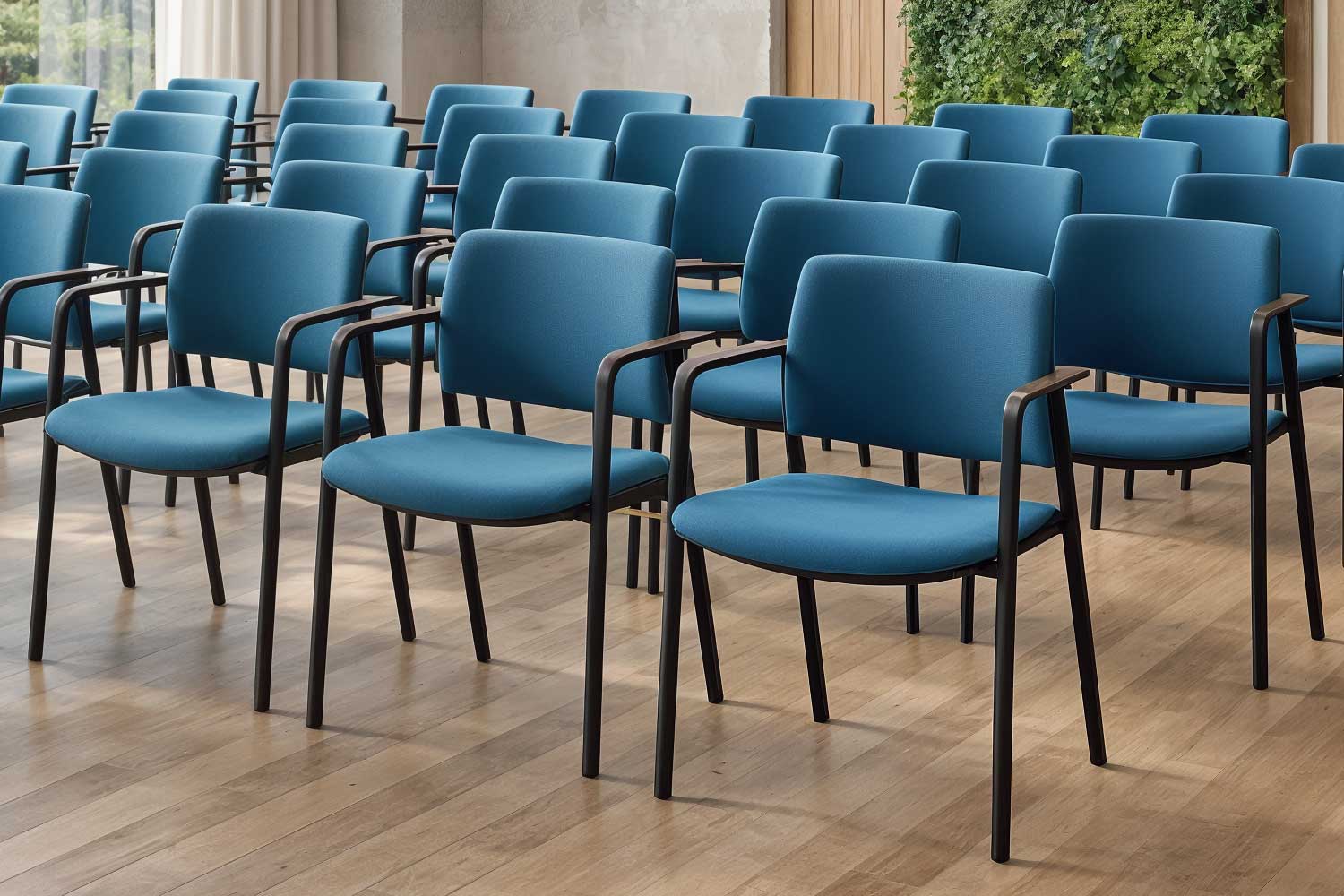
“Find me 200 dining chairs suitable for a new aged care facility. They need to be commercial grade, easy to clean, available in Australia, meet our budget, and be delivered by October.”
The AI searches suppliers, compares products, checks specifications, identifies potential options and presents you with a shortlist. It could potentially even contact suppliers, request pricing and help progress the order.
Sounds incredibly useful. And it is. But there is one important question:
Should the AI make the final decision?
That is where things get interesting.
Welcome to the age of agentic AI
You may have heard the term agentic AI increasingly used in business.
You don’t need to understand the technology behind it.
In simple terms, an AI agent is software that can do more than answer a question. It can be given a goal and then take a series of actions to help achieve it.
Instead of asking:
“Which chairs meet these specifications?”
you could ask:
“Find the best chairs for this project and help me buy them.”
The AI could research, compare, organise information, make recommendations and potentially take actions on your behalf.
This is not something that belongs to the distant future.
AI is already becoming part of how people search, communicate, research, create and make decisions. As these systems become more capable, they will increasingly influence both our personal and professional lives.
For procurement teams, that means the way organisations buy products and services is likely to change significantly.
And aged care will be no exception.
The opportunity for procurement
Think about how much time procurement teams spend gathering and comparing information.
A purchasing decision might involve:
- Finding suitable suppliers
- Comparing product specifications
- Checking pricing
- Reviewing warranties
- Checking availability and lead times
- Collecting compliance information
- Comparing sustainability credentials
- Requesting samples
- Managing quotes
- Creating purchase orders
- Following up suppliers
- Keeping records
Much of this is structured information and structured information is something AI is very good at working with.
An AI agent could potentially help a procurement manager narrow hundreds of options down to five.
It could:
- Identify that one product is cheaper but has a longer lead time.
- Flag that another supplier doesn’t provide the required documentation.
- Identify products that meet a particular set of specifications.
- Monitor prices, availability or delivery information and alert the procurement team when something changes.
That could free procurement professionals from some of the repetitive work and give them more time to focus on the decisions that actually require their expertise.
That is the opportunity.
But there is also a risk.
What happens when the cheapest product wins?
Let’s go back to our dining chair.
An AI agent has been instructed to find the best option. It searches the available information and discovers three chairs:
- Chair A is $420.
- Chair B is $495.
- Chair C is $570.
On paper, all three appear to meet the requirements.
The AI recommends Chair A. It’s the cheapest. It meets the specified dimensions. It has the required warranty. It is commercially rated. It is available within the required timeframe.
The numbers look good.
But there is something the AI doesn’t know:
Chair C is significantly easier for an older person to get in and out of.
Its proportions provide better support. Its arms are positioned to assist with standing. Its upholstery feels warmer and more residential. The manufacturer has worked extensively in aged care and understands the practical realities of furniture in a care environment. And the supplier is willing to work with the facility if something needs to change during the project.
None of that necessarily appears in a spreadsheet.
And that is the problem.
If we automate the process without understanding what really matters, we risk teaching the machine to optimise for the wrong things.
Machines compare specifications. Humans understand people.
This is particularly important in aged care. Aged care procurement is not simply about buying products. The things you purchase become part of someone’s everyday environment.
A chair isn’t just a chair. It might be where a resident sits every morning for breakfast. It might be where a family member sits during a visit. It might be where someone spends hours each day watching television, reading or talking with friends. The fabric isn’t simply a colour and a performance rating. It contributes to how a space looks, feels and is experienced.
These things matter. They matter to residents, families and staff.
And they matter to the success of an aged care environment.
This is why human judgement remains so important.
Not everything should be automated
There is a temptation whenever new technology arrives to ask:
“What can we automate?”
Perhaps the better question is:
“What should we automate?”
There is a difference.
Automating repetitive administration can be incredibly valuable. Automating the gathering and comparison of information can save enormous amounts of time. Automating routine follow-ups can reduce workload.
But some decisions benefit from human involvement precisely because they involve judgement, empathy, experience and relationships.
Consider a procurement manager selecting furniture for a new residential care environment. An AI might be able to identify ten chairs that meet the brief.
But someone still needs to ask:
- Will residents actually like sitting in them?
- Are they comfortable?
- Can someone with limited mobility use them easily?
- Do they look like furniture for someone’s home or furniture for an institution?
- Will staff be able to clean and maintain them easily?
- Will they still look good in five years?
- Does the supplier understand the environment we are furnishing?
Those aren’t simply procurement questions. They’re human questions.
The trust factor
There is another reason human involvement matters: trust.
Procurement is built on relationships. A supplier who understands your organisation can become more than someone who sends you a quote. They can:
- Become a problem-solver.
- Tell you when something in your brief might not work.
- Suggest an alternative.
- Help you navigate an unexpected issue.
- Understand what you are trying to achieve rather than simply responding to a list of specifications.
And sometimes, the most valuable part of a supplier relationship is a conversation that never appears anywhere in the procurement data. That conversation might be:
“We’ve used this fabric in another facility and the staff found it difficult to maintain. I’d recommend something different.”
Or:
“That chair meets your specification, but I’d suggest you test it with residents before committing to 200.”
Or simply:
“Tell me more about what you’re trying to achieve. I think there’s a better solution.”
That is the value of human experience.
An AI agent may eventually be able to imitate aspects of that interaction. But organisations should be careful about assuming that an automated interaction creates the same level of trust as a genuine human relationship. It doesn’t necessarily.
The procurement professional isn’t disappearing
The rise of AI doesn’t mean procurement professionals become less important. In many ways, it could make their role more valuable.
If AI handles more of the searching, sorting, comparing and administration, procurement professionals can spend more time on:
- Strategy
- Negotiation
- Supplier relationships
- Risk management
- Quality
- Governance
- Sustainability
- Understanding the end user
- Challenging recommendations
- Making informed decisions
The role moves further away from “Where can I buy this?”
and towards:
“What is the right decision for our organisation and the people we serve?”
That is a much more strategic role.
The danger of letting the algorithm decide what matters
There is a bigger issue here for every procurement professional: AI learns from the information and instructions it is given.
If your procurement process prioritises price above everything else, an AI system will naturally learn to prioritise price.
If you prioritise speed, it may favour speed.
If you prioritise specifications, it may favour specifications.
But what about things that are harder to measure? Comfort. Dignity. Aesthetics. Experience. Trust. Longevity. Service. Relationships. Resident preferences. Staff experience.
These things need to be deliberately included in the decision-making process. Otherwise, there is a risk that we automate our existing biases and assumptions rather than improving the way we make decisions.
The human-centred procurement model
The future doesn’t need to be humans versus AI.
It can be humans with AI.
Imagine a procurement team where AI does the heavy lifting.
It searches the market, gathers information, compares hundreds of products, highlights potential risks, checks documentation, creates a shortlist.
Then the procurement professional takes over. They speak with the suppliers, examine the products, test the furniture, consider the residents, involve the relevant people. And importantly, they challenge the AI’s recommendation.
And ultimately, a human makes the decision.
That is a much more powerful model.
AI handles what machines are good at.
Humans handle what humans are good at.
What can aged care procurement teams do now?
You don’t need to implement an AI agent tomorrow. In fact, the best preparation may not involve buying another piece of technology at all.
Start by understanding your own processes.
1. Map your procurement process
Write down what happens from identifying a need through to placing an order.
Which steps are repetitive?
Which require research?
Which involve data?
Which require human judgement?
This will help you identify where AI could actually provide value.
2. Identify the tasks you would happily hand to AI
Start with low-risk activities.
For example:
- Comparing product specifications
- Summarising supplier information
- Organising quotes
- Drafting supplier enquiries
- Checking whether information is missing
- Creating comparison tables
- Summarising lengthy documents
- Monitoring routine information
These are good places to explore AI assistance.
3. Identify the decisions you don’t want automated
This is equally important.
Ask your team:
“Which decisions require experience, judgement or human interaction?”
Make those boundaries explicit.
4. Improve your product data
Whether you are a buyer or supplier, clean information will become increasingly important.
Make sure product information is:
- Accurate
- Consistent
- Up to date
- Clearly structured
- Easy to compare
- Supported by appropriate documentation
If an AI cannot understand your information, neither can the person using it efficiently.
5. Start experimenting with AI now
You don’t need an expensive enterprise system.
Use the AI tools already available to you to understand what they can and cannot do.
Give AI a real procurement task.
Ask it to compare three products.
Then check its work.
Where did it perform well?
Where did it miss something?
What information did it need?
This is how your team develops AI literacy.
6. Build human judgement into your procurement criteria
Don’t only create checklists based on price and specifications.
Consider whether your procurement process captures:
- Resident experience
- Comfort
- Accessibility
- Durability
- Maintenance
- Design
- Service
- Supplier capability
- Warranty
- Long-term value
The things you measure are the things your future AI systems will be able to optimise.
7. Strengthen supplier relationships
As purchasing becomes more automated, genuine relationships may become more, not less, valuable.
Know your key suppliers. Understand how they manufacture. Understand their capabilities. Talk to them. Ask questions. Let them understand your projects.
A strong supplier relationship can provide knowledge that no product comparison table can capture.
8. Ask your technology providers what is coming
Speak to your procurement software, ERP, CRM and other technology providers.
Ask:
“How are you planning to use AI agents in your platform?”
“What decisions will the system be able to make?”
“What controls will we have?”
“How will recommendations be checked?”
“What information will the system use?”
You don’t need all the answers today.
But you should start asking the questions.
9. Create an AI policy for procurement
Even a simple internal framework can help.
Define:
- What AI can be used for
- What information can be entered into AI tools
- Which decisions require human approval
- How AI recommendations should be checked
- Who remains accountable for the final decision
The technology may be new.
The need for accountability isn’t.
10. Keep talking to people
This may be the simplest and most important recommendation.
Talk to residents, families, care staff, designers, suppliers and your procurement team.
Technology should help you understand people better, not create more distance from them.
The future isn’t less human. It should be more deliberately human.
Agentic AI is coming. It will change how we search, shop, work, compare products, manage information. And eventually, how many organisations procure goods and services.
The question isn’t whether we should resist it. The opportunity is to use it intelligently. Let AI take care of the repetitive work. But don’t let efficiency become the only measure of success.
Because when you’re furnishing an aged care environment, you’re not simply buying furniture.
You’re helping create the place where people live.
And that is something worth keeping human.
The FHG perspective
At FHG, we believe technology has an important role to play in making procurement easier, more informed and more efficient.
But we also believe that some of the most important conversations can’t be reduced to a product specification.
They happen when an FHG Project Consultant understands the brief, asks the right questions, listens to the challenges a facility is facing and works with the client to find the right solution.
Because the future of procurement may be powered by AI.
But the best decisions will still be made by people who understand people.















Recent Updates




Should AI Buy Furniture? The Risks and Opportunities of Agentic Procurement in Aged Care
Imagine you are responsible for furnishing a new 100-bed aged care home…
There are hundreds of decisions to make.
You need to compare furniture specifications, prices, fabrics, warranties, lead times and compliance requirements. You need to make sure chairs are suitable for elderly people with mobility challenges, tables will withstand commercial use and fabrics are practical for the environment. You need to coordinate with designers, suppliers, builders and your internal team.
Now imagine that instead of spending hours searching supplier websites, comparing spreadsheets and requesting information, you simply tell your AI assistant:
“Find me 200 dining chairs suitable for a new aged care facility. They need to be commercial grade, easy to clean, available in Australia, meet our budget, and be delivered by October.”
The AI searches suppliers, compares products, checks specifications, identifies potential options and presents you with a shortlist. It could potentially even contact suppliers, request pricing and help progress the order.
Sounds incredibly useful. And it is. But there is one important question:
Should the AI make the final decision?
That is where things get interesting.
Welcome to the age of agentic AI
You may have heard the term agentic AI increasingly used in business.
You don’t need to understand the technology behind it.
In simple terms, an AI agent is software that can do more than answer a question. It can be given a goal and then take a series of actions to help achieve it.
Instead of asking:
“Which chairs meet these specifications?”
you could ask:
“Find the best chairs for this project and help me buy them.”
The AI could research, compare, organise information, make recommendations and potentially take actions on your behalf.
This is not something that belongs to the distant future.
AI is already becoming part of how people search, communicate, research, create and make decisions. As these systems become more capable, they will increasingly influence both our personal and professional lives.
For procurement teams, that means the way organisations buy products and services is likely to change significantly.
And aged care will be no exception.
The opportunity for procurement
Think about how much time procurement teams spend gathering and comparing information.
A purchasing decision might involve:
- Finding suitable suppliers
- Comparing product specifications
- Checking pricing
- Reviewing warranties
- Checking availability and lead times
- Collecting compliance information
- Comparing sustainability credentials
- Requesting samples
- Managing quotes
- Creating purchase orders
- Following up suppliers
- Keeping records
Much of this is structured information and structured information is something AI is very good at working with.
An AI agent could potentially help a procurement manager narrow hundreds of options down to five.
It could:
- Identify that one product is cheaper but has a longer lead time.
- Flag that another supplier doesn’t provide the required documentation.
- Identify products that meet a particular set of specifications.
- Monitor prices, availability or delivery information and alert the procurement team when something changes.
That could free procurement professionals from some of the repetitive work and give them more time to focus on the decisions that actually require their expertise.
That is the opportunity.
But there is also a risk.
What happens when the cheapest product wins?
Let’s go back to our dining chair.
An AI agent has been instructed to find the best option. It searches the available information and discovers three chairs:
- Chair A is $420.
- Chair B is $495.
- Chair C is $570.
On paper, all three appear to meet the requirements.
The AI recommends Chair A. It’s the cheapest. It meets the specified dimensions. It has the required warranty. It is commercially rated. It is available within the required timeframe.
The numbers look good.
But there is something the AI doesn’t know:
Chair C is significantly easier for an older person to get in and out of.
Its proportions provide better support. Its arms are positioned to assist with standing. Its upholstery feels warmer and more residential. The manufacturer has worked extensively in aged care and understands the practical realities of furniture in a care environment. And the supplier is willing to work with the facility if something needs to change during the project.
None of that necessarily appears in a spreadsheet.
And that is the problem.
If we automate the process without understanding what really matters, we risk teaching the machine to optimise for the wrong things.
Machines compare specifications. Humans understand people.
This is particularly important in aged care. Aged care procurement is not simply about buying products. The things you purchase become part of someone’s everyday environment.
A chair isn’t just a chair. It might be where a resident sits every morning for breakfast. It might be where a family member sits during a visit. It might be where someone spends hours each day watching television, reading or talking with friends. The fabric isn’t simply a colour and a performance rating. It contributes to how a space looks, feels and is experienced.
These things matter. They matter to residents, families and staff.
And they matter to the success of an aged care environment.
This is why human judgement remains so important.
Not everything should be automated
There is a temptation whenever new technology arrives to ask:
“What can we automate?”
Perhaps the better question is:
“What should we automate?”
There is a difference.
Automating repetitive administration can be incredibly valuable. Automating the gathering and comparison of information can save enormous amounts of time. Automating routine follow-ups can reduce workload.
But some decisions benefit from human involvement precisely because they involve judgement, empathy, experience and relationships.
Consider a procurement manager selecting furniture for a new residential care environment. An AI might be able to identify ten chairs that meet the brief.
But someone still needs to ask:
- Will residents actually like sitting in them?
- Are they comfortable?
- Can someone with limited mobility use them easily?
- Do they look like furniture for someone’s home or furniture for an institution?
- Will staff be able to clean and maintain them easily?
- Will they still look good in five years?
- Does the supplier understand the environment we are furnishing?
Those aren’t simply procurement questions. They’re human questions.
The trust factor
There is another reason human involvement matters: trust.
Procurement is built on relationships. A supplier who understands your organisation can become more than someone who sends you a quote. They can:
- Become a problem-solver.
- Tell you when something in your brief might not work.
- Suggest an alternative.
- Help you navigate an unexpected issue.
- Understand what you are trying to achieve rather than simply responding to a list of specifications.
And sometimes, the most valuable part of a supplier relationship is a conversation that never appears anywhere in the procurement data. That conversation might be:
“We’ve used this fabric in another facility and the staff found it difficult to maintain. I’d recommend something different.”
Or:
“That chair meets your specification, but I’d suggest you test it with residents before committing to 200.”
Or simply:
“Tell me more about what you’re trying to achieve. I think there’s a better solution.”
That is the value of human experience.
An AI agent may eventually be able to imitate aspects of that interaction. But organisations should be careful about assuming that an automated interaction creates the same level of trust as a genuine human relationship. It doesn’t necessarily.
The procurement professional isn’t disappearing
The rise of AI doesn’t mean procurement professionals become less important. In many ways, it could make their role more valuable.
If AI handles more of the searching, sorting, comparing and administration, procurement professionals can spend more time on:
- Strategy
- Negotiation
- Supplier relationships
- Risk management
- Quality
- Governance
- Sustainability
- Understanding the end user
- Challenging recommendations
- Making informed decisions
The role moves further away from “Where can I buy this?”
and towards:
“What is the right decision for our organisation and the people we serve?”
That is a much more strategic role.
The danger of letting the algorithm decide what matters
There is a bigger issue here for every procurement professional: AI learns from the information and instructions it is given.
If your procurement process prioritises price above everything else, an AI system will naturally learn to prioritise price.
If you prioritise speed, it may favour speed.
If you prioritise specifications, it may favour specifications.
But what about things that are harder to measure? Comfort. Dignity. Aesthetics. Experience. Trust. Longevity. Service. Relationships. Resident preferences. Staff experience.
These things need to be deliberately included in the decision-making process. Otherwise, there is a risk that we automate our existing biases and assumptions rather than improving the way we make decisions.
The human-centred procurement model
The future doesn’t need to be humans versus AI.
It can be humans with AI.
Imagine a procurement team where AI does the heavy lifting.
It searches the market, gathers information, compares hundreds of products, highlights potential risks, checks documentation, creates a shortlist.
Then the procurement professional takes over. They speak with the suppliers, examine the products, test the furniture, consider the residents, involve the relevant people. And importantly, they challenge the AI’s recommendation.
And ultimately, a human makes the decision.
That is a much more powerful model.
AI handles what machines are good at.
Humans handle what humans are good at.
What can aged care procurement teams do now?
You don’t need to implement an AI agent tomorrow. In fact, the best preparation may not involve buying another piece of technology at all.
Start by understanding your own processes.
1. Map your procurement process
Write down what happens from identifying a need through to placing an order.
Which steps are repetitive?
Which require research?
Which involve data?
Which require human judgement?
This will help you identify where AI could actually provide value.
2. Identify the tasks you would happily hand to AI
Start with low-risk activities.
For example:
- Comparing product specifications
- Summarising supplier information
- Organising quotes
- Drafting supplier enquiries
- Checking whether information is missing
- Creating comparison tables
- Summarising lengthy documents
- Monitoring routine information
These are good places to explore AI assistance.
3. Identify the decisions you don’t want automated
This is equally important.
Ask your team:
“Which decisions require experience, judgement or human interaction?”
Make those boundaries explicit.
4. Improve your product data
Whether you are a buyer or supplier, clean information will become increasingly important.
Make sure product information is:
- Accurate
- Consistent
- Up to date
- Clearly structured
- Easy to compare
- Supported by appropriate documentation
If an AI cannot understand your information, neither can the person using it efficiently.
5. Start experimenting with AI now
You don’t need an expensive enterprise system.
Use the AI tools already available to you to understand what they can and cannot do.
Give AI a real procurement task.
Ask it to compare three products.
Then check its work.
Where did it perform well?
Where did it miss something?
What information did it need?
This is how your team develops AI literacy.
6. Build human judgement into your procurement criteria
Don’t only create checklists based on price and specifications.
Consider whether your procurement process captures:
- Resident experience
- Comfort
- Accessibility
- Durability
- Maintenance
- Design
- Service
- Supplier capability
- Warranty
- Long-term value
The things you measure are the things your future AI systems will be able to optimise.
7. Strengthen supplier relationships
As purchasing becomes more automated, genuine relationships may become more, not less, valuable.
Know your key suppliers. Understand how they manufacture. Understand their capabilities. Talk to them. Ask questions. Let them understand your projects.
A strong supplier relationship can provide knowledge that no product comparison table can capture.
8. Ask your technology providers what is coming
Speak to your procurement software, ERP, CRM and other technology providers.
Ask:
“How are you planning to use AI agents in your platform?”
“What decisions will the system be able to make?”
“What controls will we have?”
“How will recommendations be checked?”
“What information will the system use?”
You don’t need all the answers today.
But you should start asking the questions.
9. Create an AI policy for procurement
Even a simple internal framework can help.
Define:
- What AI can be used for
- What information can be entered into AI tools
- Which decisions require human approval
- How AI recommendations should be checked
- Who remains accountable for the final decision
The technology may be new.
The need for accountability isn’t.
10. Keep talking to people
This may be the simplest and most important recommendation.
Talk to residents, families, care staff, designers, suppliers and your procurement team.
Technology should help you understand people better, not create more distance from them.
The future isn’t less human. It should be more deliberately human.
Agentic AI is coming. It will change how we search, shop, work, compare products, manage information. And eventually, how many organisations procure goods and services.
The question isn’t whether we should resist it. The opportunity is to use it intelligently. Let AI take care of the repetitive work. But don’t let efficiency become the only measure of success.
Because when you’re furnishing an aged care environment, you’re not simply buying furniture.
You’re helping create the place where people live.
And that is something worth keeping human.
The FHG perspective
At FHG, we believe technology has an important role to play in making procurement easier, more informed and more efficient.
But we also believe that some of the most important conversations can’t be reduced to a product specification.
They happen when an FHG Project Consultant understands the brief, asks the right questions, listens to the challenges a facility is facing and works with the client to find the right solution.
Because the future of procurement may be powered by AI.
But the best decisions will still be made by people who understand people.