Why Retirement Living Furniture Shouldn’t Look Like Aged Care Furniture
Australian retirement living is not aged care with nicer landscaping.
Yet walk into some retirement communities and the distinction can be difficult to see. Heavy institutional-looking chairs. Clinical finishes. Furniture selected primarily for durability, with little consideration for how the space actually feels to the people living in it.
That approach is increasingly out of step with the expectations of today’s retirement living resident.
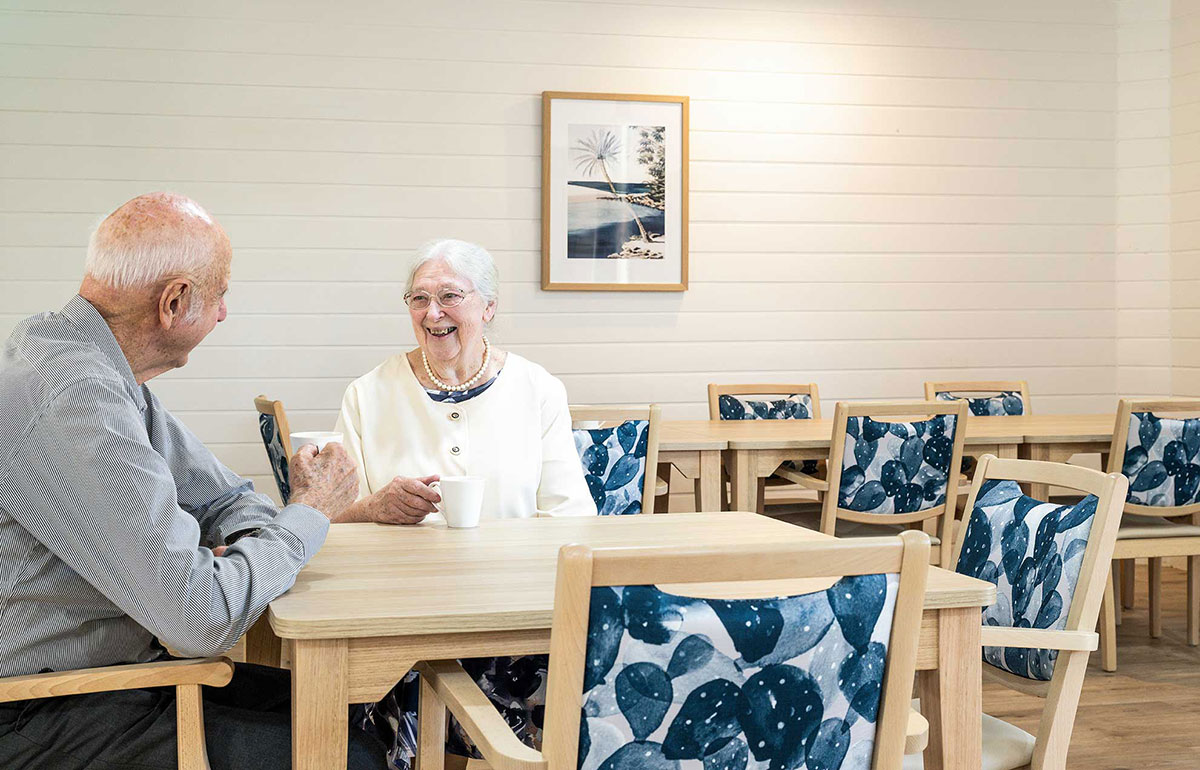
Retirement living should feel like home, not a waiting room for care.
That doesn’t mean compromising on safety, durability or practicality. It means finding furniture that delivers the performance required for a busy community while still looking and feeling residential.
For procurement teams, developers, designers and operators, that distinction is worth taking seriously.
Retirement living residents aren’t buying “care”
When someone chooses a retirement community, they’re making a lifestyle decision. They may be downsizing. They may be looking for more social connection. They may want access to amenities, less home maintenance or the freedom to travel.
They are not necessarily thinking about aged care.
In fact, many residents entering retirement living are highly independent and design-conscious. They have spent decades choosing furniture for their homes and have clear preferences about how they want their new environment to look and feel.
That creates an important design challenge:
How do you create an environment that is safe and practical without making it feel institutional?
The answer isn’t to ignore functionality.
It’s to make functionality less obvious.
The best retirement living furniture hides its performance
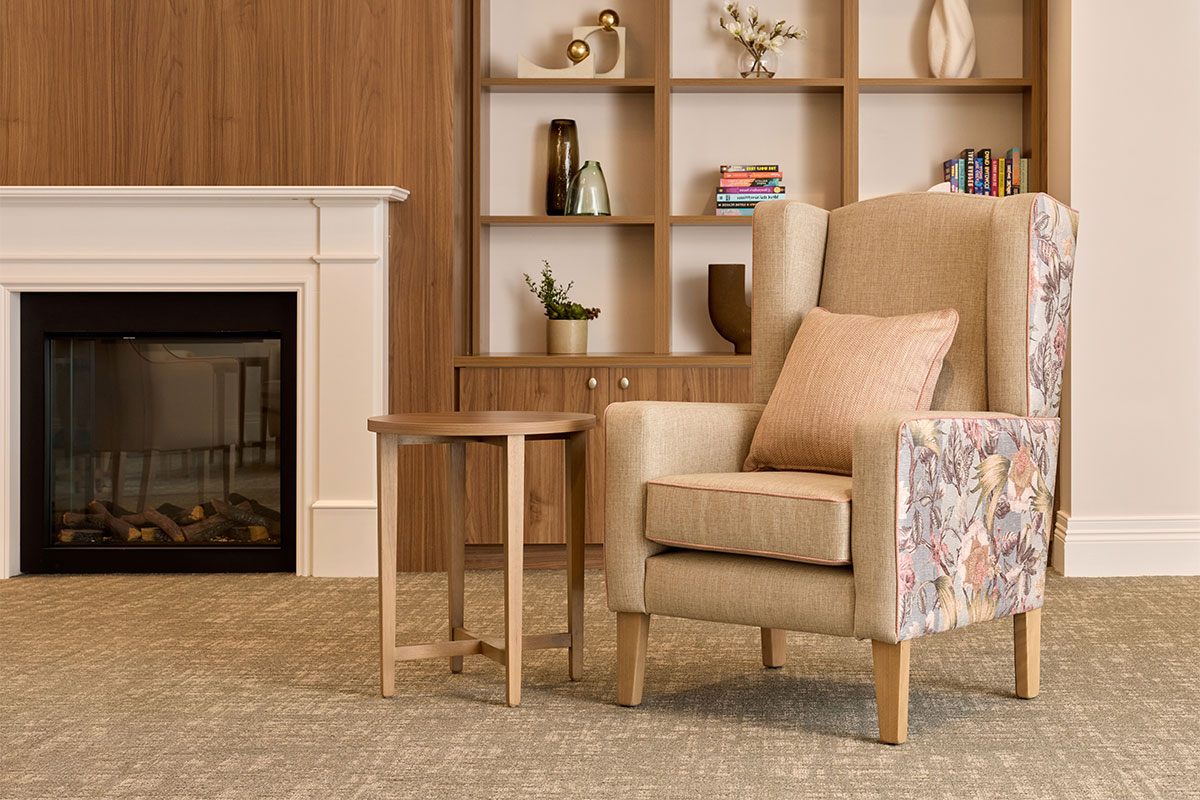
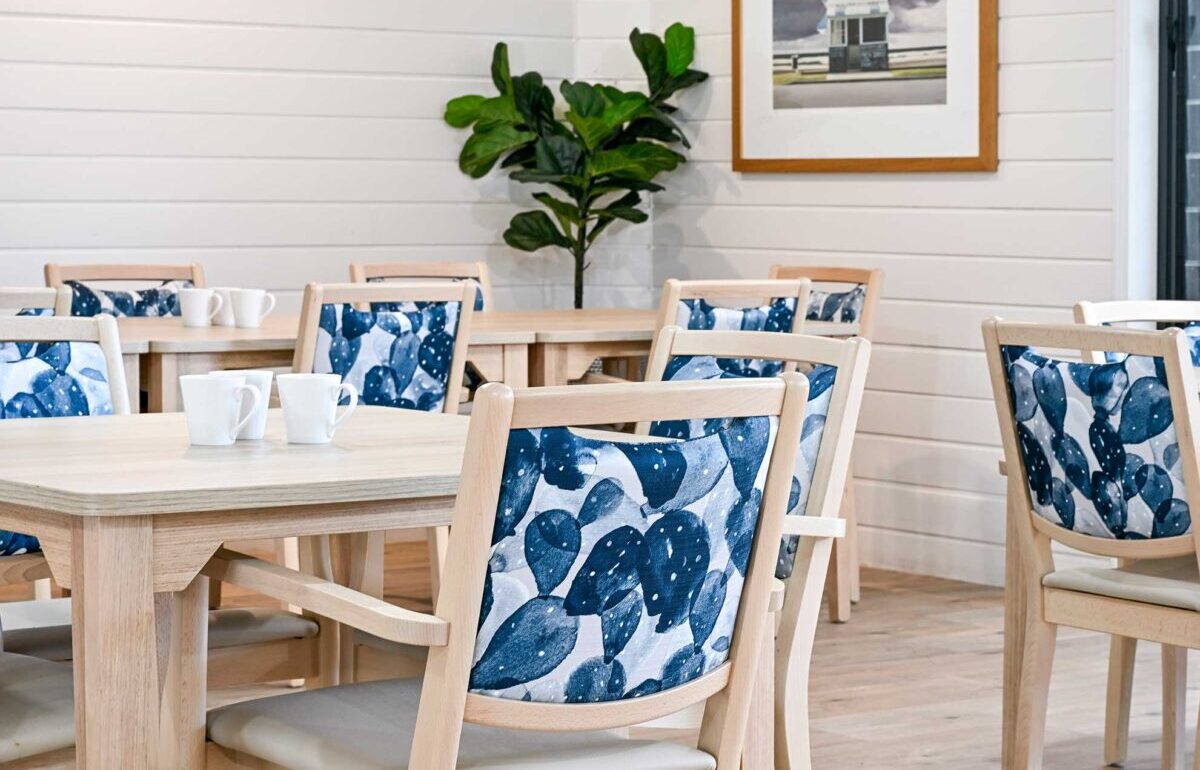
A good chair doesn’t need to look like a “support chair”. A durable upholstery fabric doesn’t need to look like healthcare vinyl. A robust timber frame doesn’t need to look industrial. And a dining table designed to withstand years of daily use doesn’t need to look like commercial furniture.
The goal is to combine residential aesthetics with commercial performance.
For example, furniture can incorporate:
- Robust construction and joinery
- Durable, easy-care upholstery
- Stable and appropriately weighted designs
- Supportive seat heights and proportions
- Easy-clean surfaces
- Durable protective finishes
- Replaceable or repairable components
- Designs that accommodate changing mobility needs
- Materials selected for the level of use and maintenance required
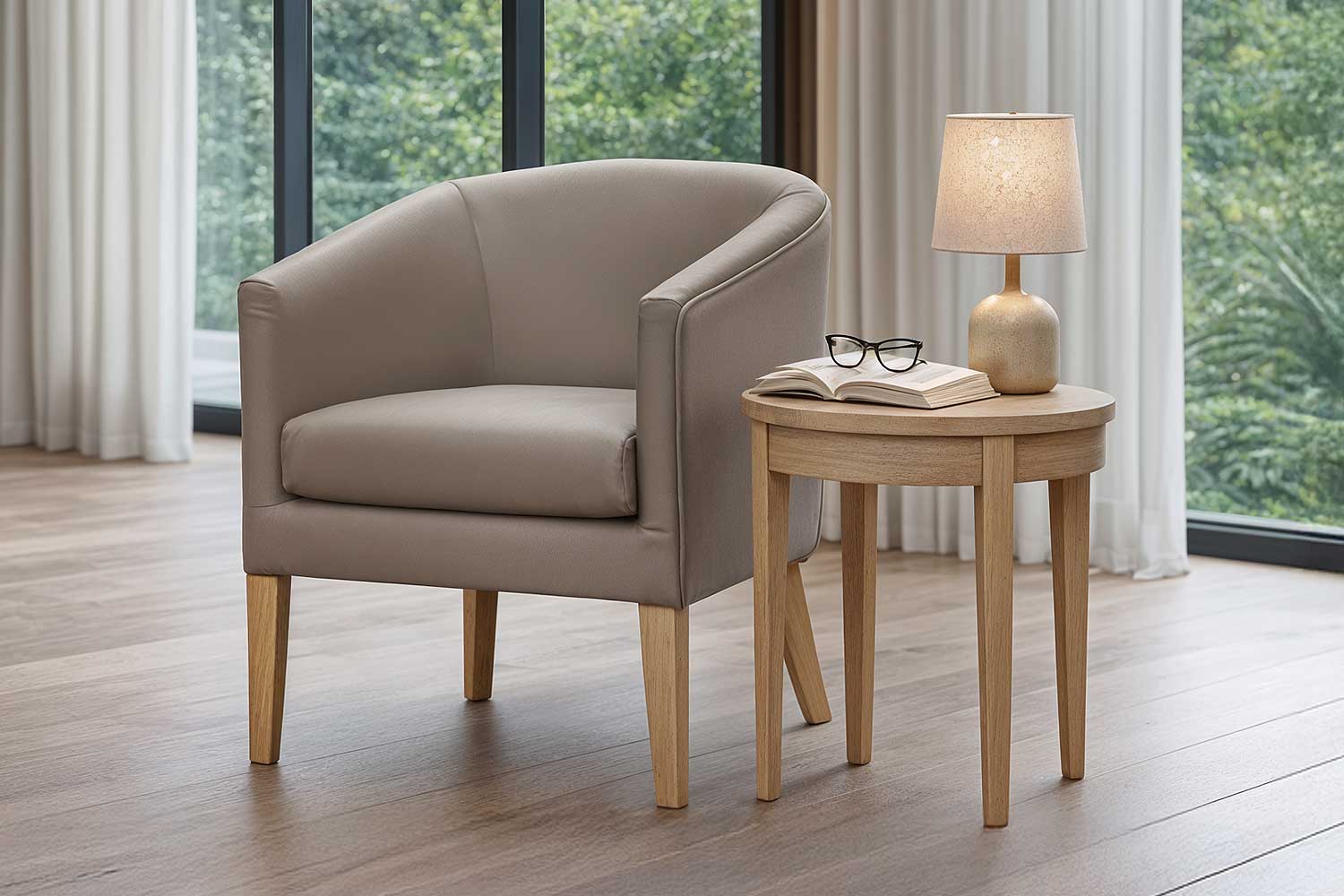
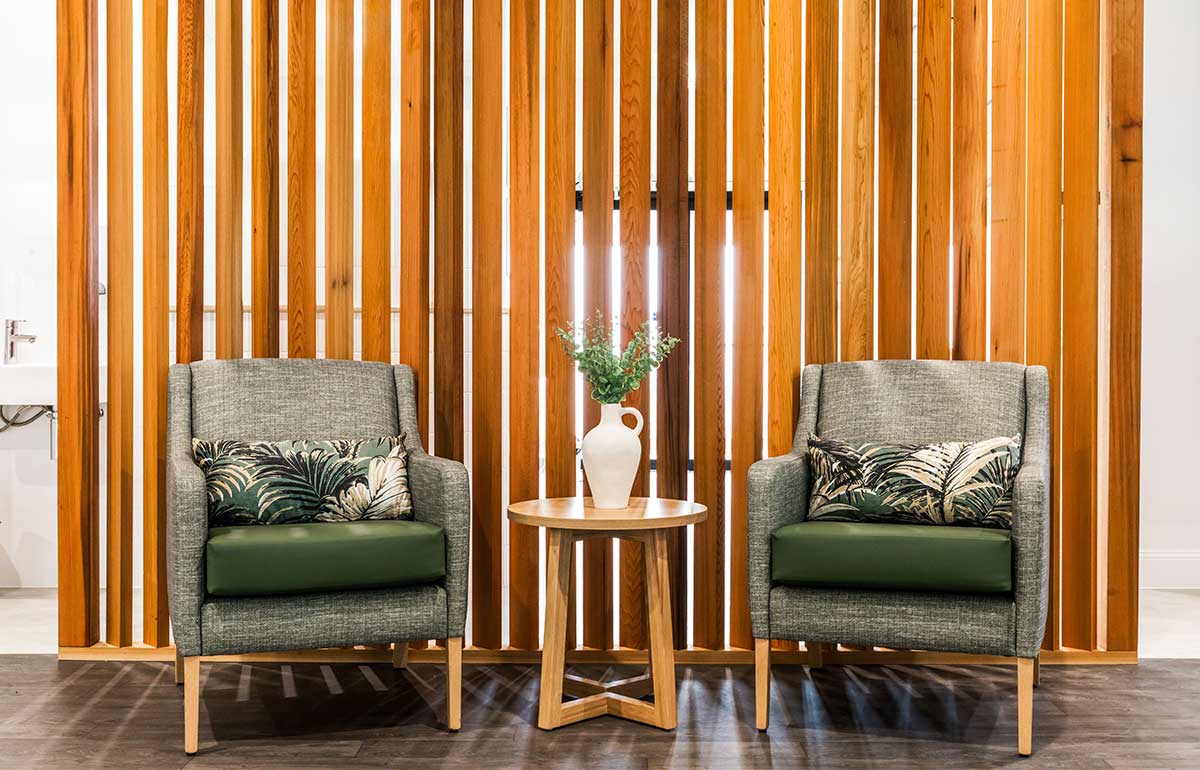
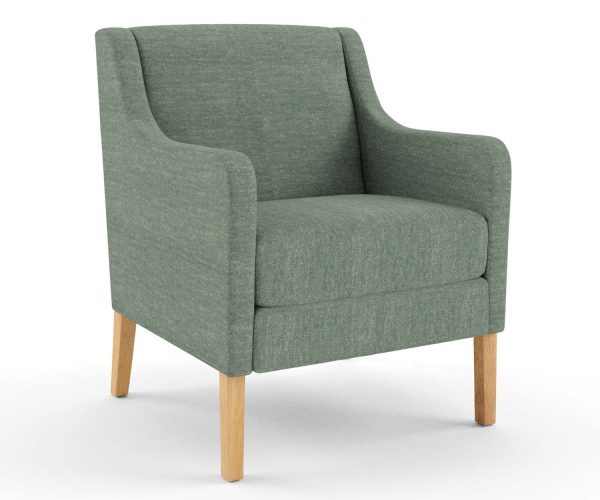
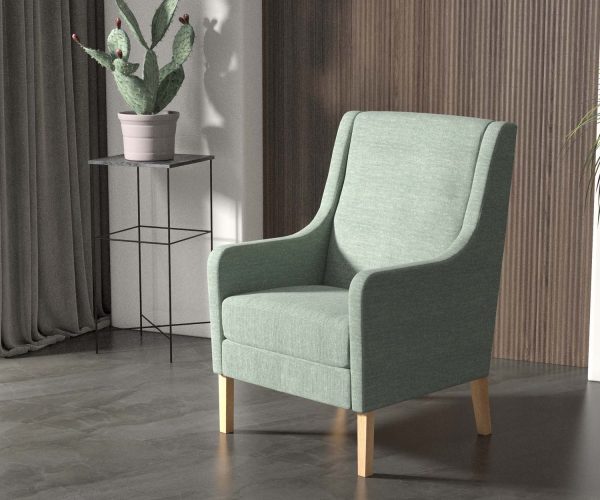
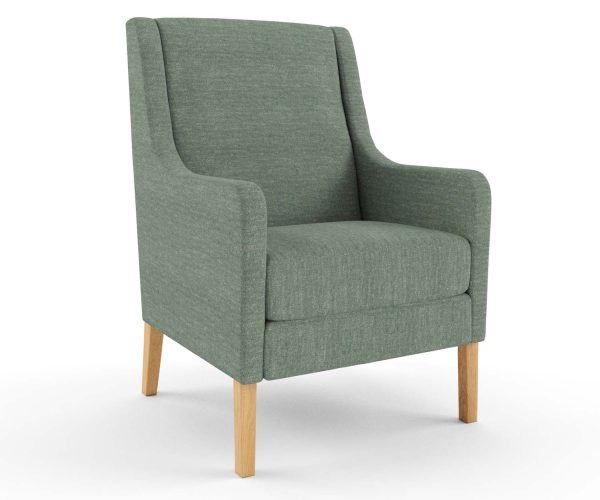
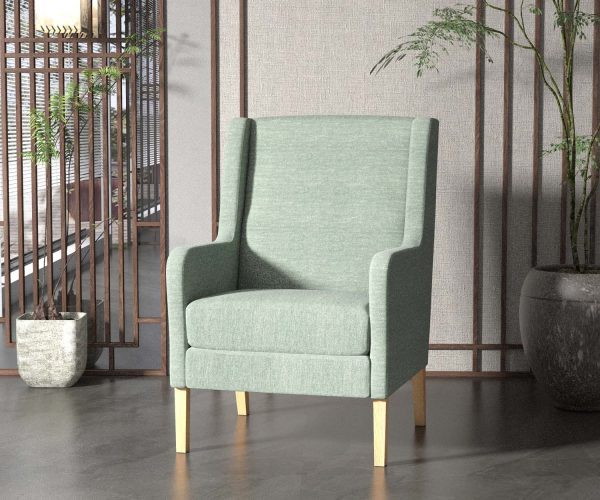
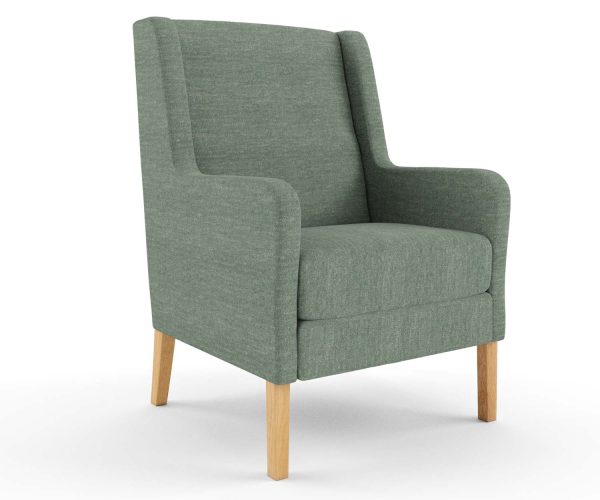
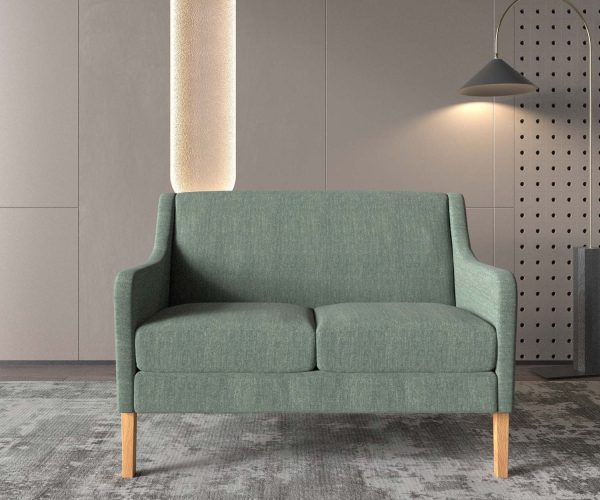
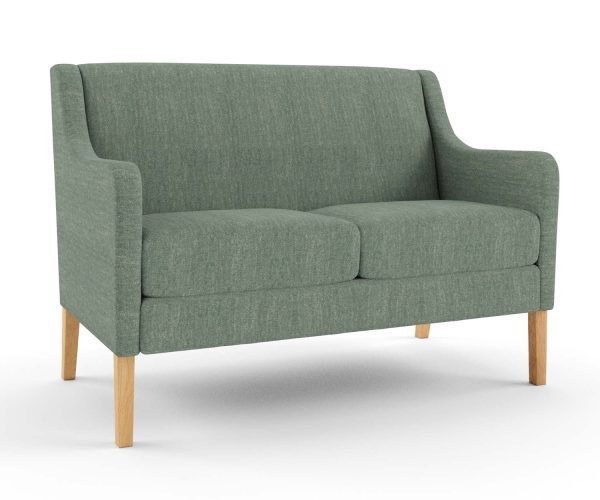
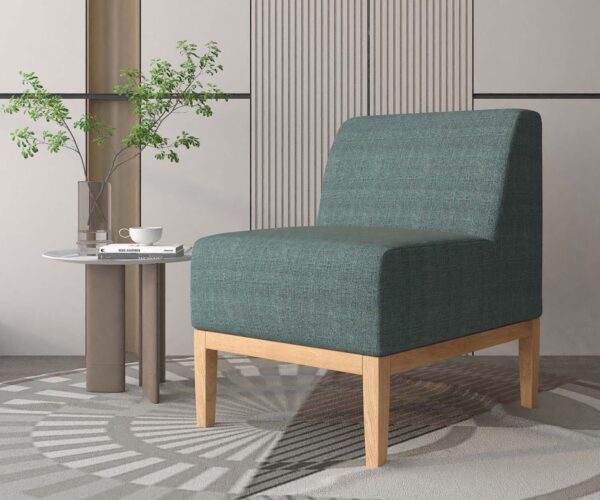
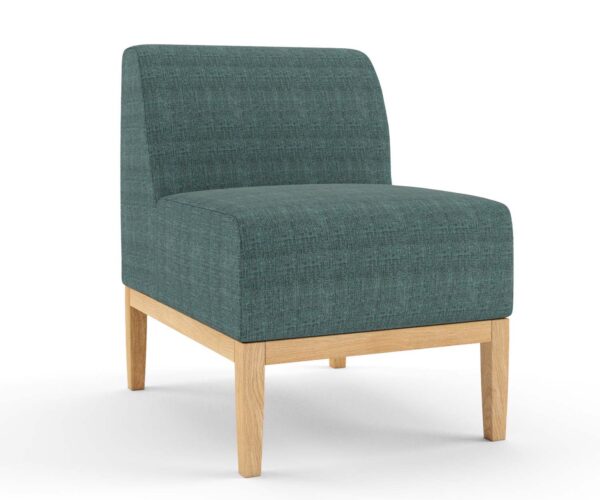
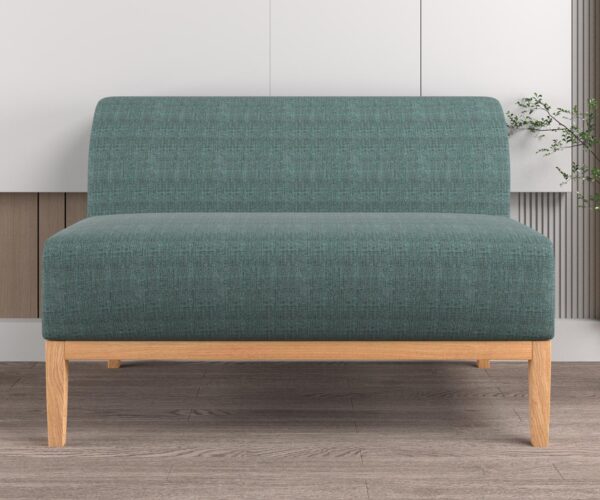
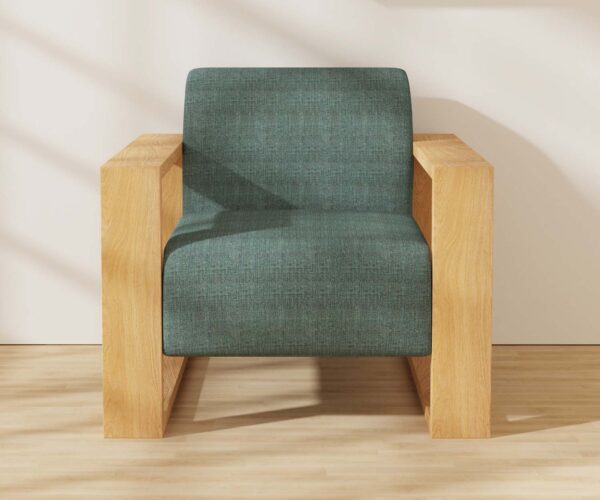
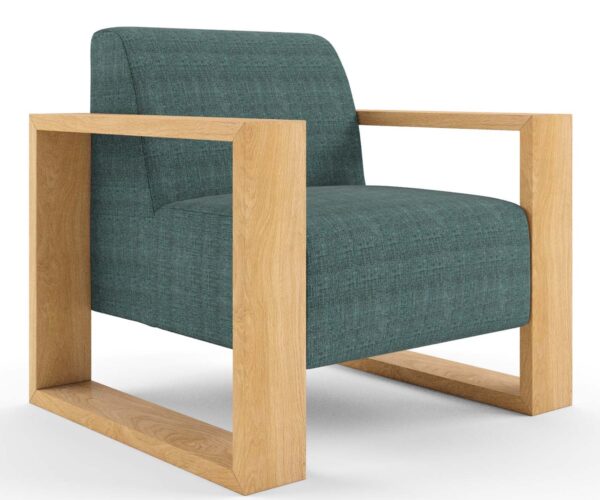
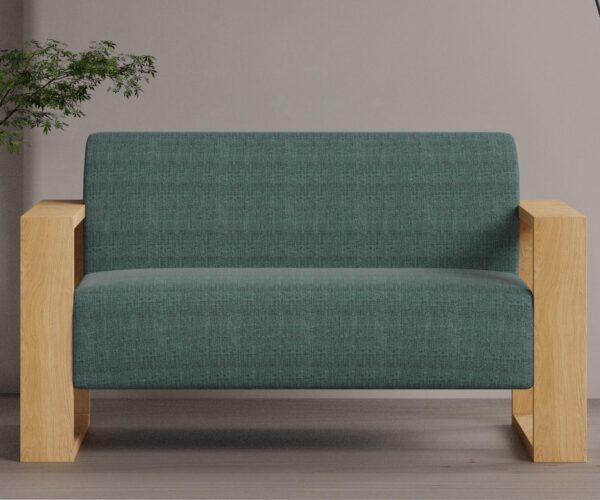
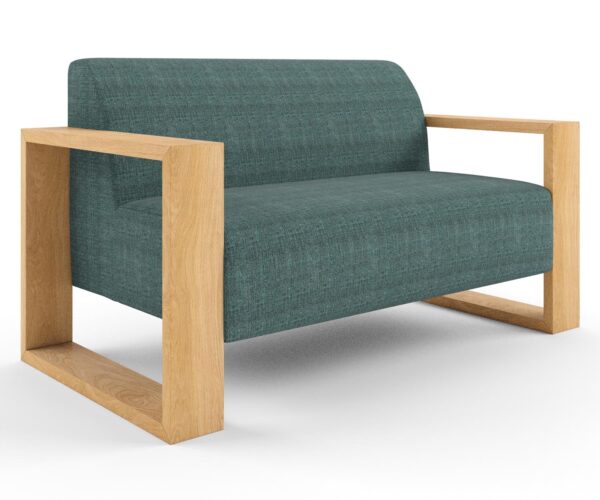
The resident sees a beautiful armchair. The operator sees a product designed to withstand years of use.
That’s the sweet spot.
7 ways to make retirement living furniture feel more residential
If you’re reviewing a furniture specification for a retirement living project, start here.
1. Start with the experience, not the product
Before selecting a chair or table, ask:
What should this space feel like?
Warm? Contemporary? Coastal? Sophisticated? Familiar? Boutique-hotel inspired?
Then select furniture that supports that experience.
A common mistake is specifying furniture first and trying to create the design aesthetic around it. The better approach is to establish the resident experience first, then determine the performance requirements and select furniture accordingly.
2. Avoid “institutional cues”
Look critically at your specification.
Does the furniture have:
- Exposed clinical-looking mechanisms?
- Harsh, utilitarian finishes?
- Generic commercial upholstery?
- Oversized proportions?
- A limited or dated colour palette?
- Designs that immediately remind people of healthcare environments?
If so, ask whether those features are genuinely necessary or simply habitual.
There is a difference between designing for accessibility and making accessibility the visual identity of a space.
3. Specify performance behind the scenes
Don’t compromise on durability. Instead, be specific about what durability actually means.
Ask suppliers about:
- Frame construction
- Joinery
- Foam density and resilience
- Upholstery abrasion performance
- Stain resistance
- Cleanability
- Finish durability
- Weight capacity
- Warranty
- Replacement components
- Repairability
- Expected service life
A supplier should be able to explain why a product is suitable for retirement living, not simply tell you that it is.
4. Give residents a sense of choice
A retirement community doesn’t need every piece of furniture to be identical.
Consider where variation can be introduced through:
- Upholstery
- Timber finishes
- Accent colours
- Occasional furniture
- Dining chairs
- Artwork and accessories
This can create a more residential environment while maintaining consistency across the project.
For multi-site operators, you can also establish a core furniture specification while allowing selected finishes or products to vary between communities.
5. Think about changing needs
Residents’ needs can change over time. That doesn’t mean every product needs to be designed like medical equipment.
Instead, look for discreet features that support independence and comfort.
For seating, consider:
- Seat height
- Seat depth
- Arm height
- Ease of getting in and out
- Back support
- Stability
- Integrated handles where appropriate
- Whether the chair remains visually residential
The question isn’t simply:
“Is this suitable for an older person?”
Ask:
“Will this help someone remain comfortable and independent without making the environment feel clinical?”
6. Design communal spaces like places people want to use
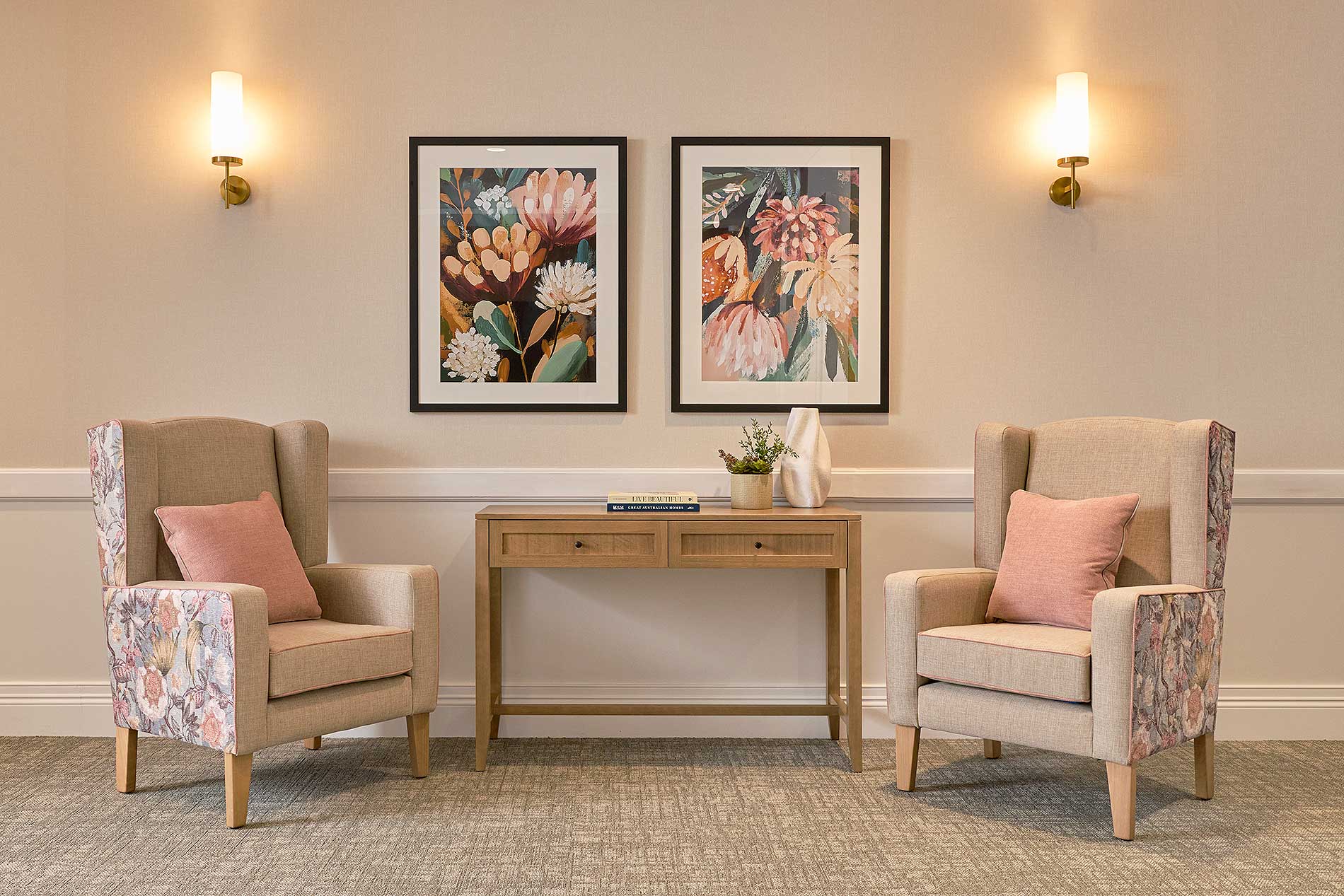
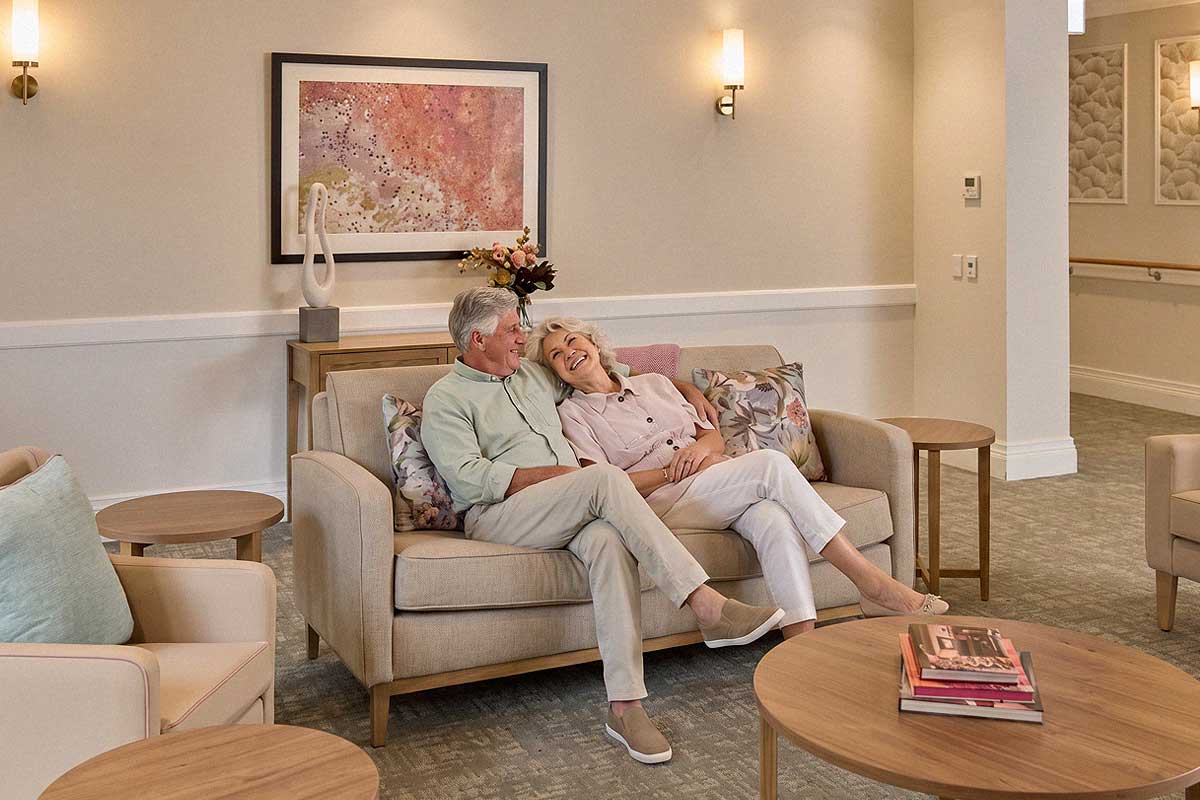
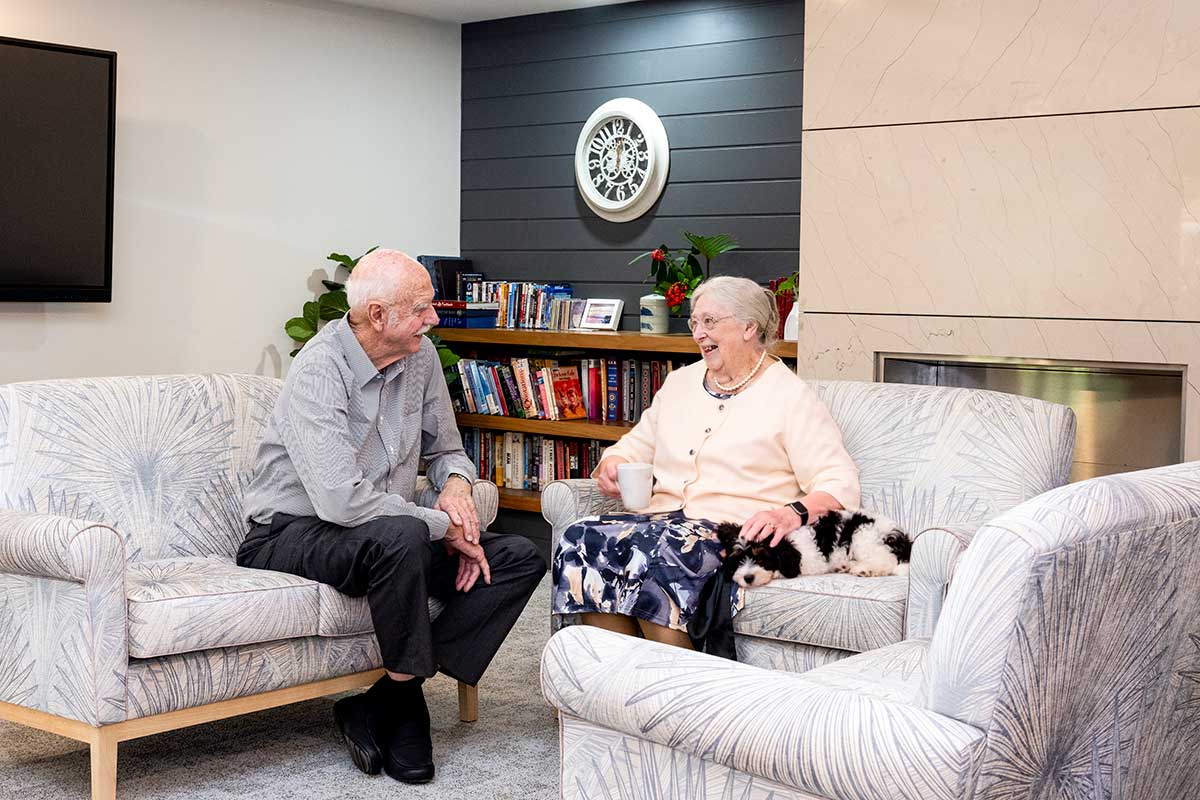
A beautiful communal lounge is more than an interior design exercise. It’s an invitation.
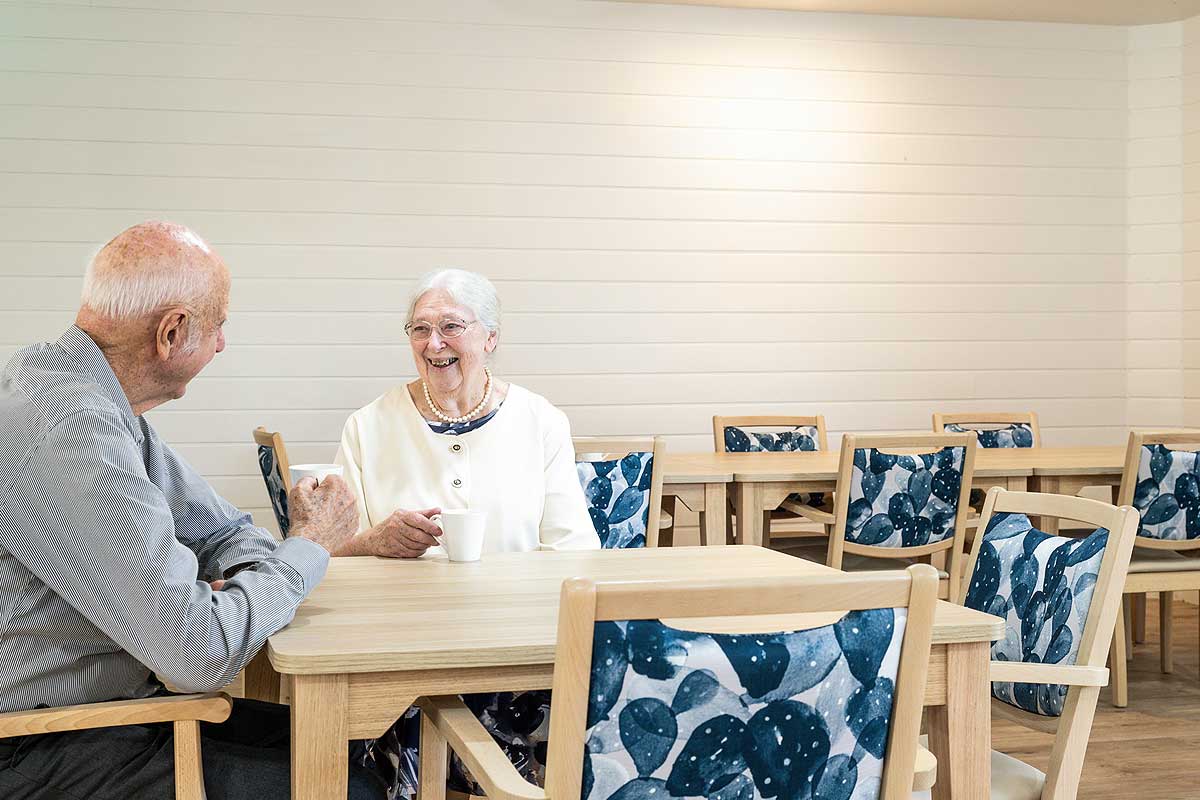
If residents enjoy the environment, they’re more likely to use it, whether that’s meeting friends, joining an activity, having coffee with family or simply sitting and reading.
Furniture should therefore support different ways of using the space.
Consider a mix of:
- Individual lounge chairs
- Sofas
- Side tables
- Dining settings
- Occasional tables
- Flexible seating arrangements
The objective is to create spaces that feel social, comfortable and naturally residential.
7. Think beyond the handover
The furniture specification shouldn’t end when the project is delivered.
Ask what happens five years from now.
Can damaged components be replaced?
Can a chair be reupholstered?
Can additional pieces be manufactured to match?
Will the supplier still be able to provide the same finish?
Can furniture be repaired rather than discarded?
This is particularly important for operators managing multiple communities.
A product that looks good on day one isn’t necessarily a good procurement decision if it becomes difficult or expensive to maintain later.
10 questions to ask your furniture supplier
Before signing off your retirement living furniture package, ask your supplier:
1. What makes this product suitable for retirement living?
Don’t settle for “it’s durable”. Ask them to explain the actual design and construction features.
2. How is the furniture different from your aged care range?
This is a surprisingly useful question. A supplier who understands the sector should be able to explain the difference between supporting residents and creating an institutional aesthetic.
3. What happens if something is damaged?
Find out whether individual components can be repaired or replaced.
4. What is the expected service life?
A warranty isn’t the same thing as expected service life. Ask about both.
5. What testing has been undertaken?
Depending on the product, this may include testing relating to strength, stability, durability, upholstery performance or other relevant requirements. Ask for evidence rather than assumptions.
6. How easy is it to clean and maintain?
Ask specifically about spills, stains, routine cleaning and maintenance requirements.
7. Can we customise the furniture?
Find out whether dimensions, finishes, fabrics or other elements can be adapted to suit the project.
8. Can you reproduce the same product or finish in five years?
This matters enormously for operators with ongoing refurbishment programs.
9. Where is the furniture manufactured?
Understanding the supply chain can help you assess lead times, consistency, quality control and responsiveness.
10. Who will manage the project after we place the order?
A good furniture supplier should offer more than a quote.
You should know who your point of contact is, how variations will be managed, how delivery will be coordinated and who will resolve issues if something doesn’t go according to plan.
A simple test: would you put it in your own home?
There’s one question that can cut through a surprisingly complicated furniture specification:
Would you choose this furniture for your own home?
Not whether it meets a specification, it’s the cheapest option or it has been used in aged care before.
Would you actually want to sit in it, be happy for your family to see it or still like it five years from now?
Would it make you feel proud of your home?
That doesn’t mean every piece of furniture needs to be luxurious or expensive.
It means function shouldn’t come at the expense of dignity and design.
FAQs
Should retirement living furniture be different from aged care furniture?
Yes, although there can be significant overlap in performance requirements.
Retirement living furniture needs to accommodate the realities of older residents and high-use communal environments, but the design brief is generally more residential. The furniture should support comfort, safety and independence without unnecessarily creating an institutional appearance.
Does retirement living furniture need to be as durable as aged care furniture?
Durability should be determined by the environment and expected level of use rather than simply by the sector name.
Communal areas in retirement living can experience significant daily use, so robust construction and appropriate upholstery and finishes are important. However, durability does not require furniture to look clinical.
What should I look for when choosing retirement living chairs?
Consider comfort, seat height and depth, stability, arm positioning, ease of sitting down and standing up, upholstery durability, cleanability and overall aesthetic.
Importantly, consider whether the chair will still look appropriate in a residential environment.
What fabrics are best for retirement living?
There isn’t one universal “best” fabric.
The right choice depends on the location, level of use, cleaning requirements, design intent and budget. Look at factors such as abrasion performance, stain resistance, cleanability, composition, colourfastness and relevant environmental or chemical considerations.
Should retirement villages use commercial or residential furniture?
Neither label tells you enough.
Residential furniture may not have the durability required for communal areas, while generic commercial furniture can look too institutional.
The better approach is to specify furniture based on actual performance requirements and the desired resident experience.
Is custom furniture worth considering for retirement living?
It can be, particularly where a project has specific spatial, aesthetic or functional requirements.
Custom manufacturing can allow operators and designers to specify dimensions, finishes, fabrics and details that aren’t available in an off-the-shelf product.
It can also be useful for creating a consistent furniture language across multiple areas or developments.
How can retirement living furniture support ageing in place?
Furniture can incorporate discreet features that make everyday activities easier as residents’ needs change.
Consider appropriate seat heights, supportive proportions, stable construction, easy-to-use features and furniture that remains comfortable and attractive as mobility changes.
The objective is to support independence without making the environment feel medical.
The future of retirement living furniture
The retirement living sector doesn’t need to choose between beautiful and practical.
The best projects demonstrate that the two can coexist.
Residents deserve spaces that feel like homes. Operators need furniture that performs. Procurement teams need confidence that what they specify today will continue to deliver value years after the project is complete.
That is why retirement living furniture shouldn’t simply be aged care furniture with a different fabric.
It needs its own design philosophy.
One that puts the resident experience first, builds performance into the specification and recognises that ageing doesn’t mean giving up on good design.
At FHG, we design and manufacture furniture specifically for environments where residential design, durability and changing resident needs need to work together. From individual pieces to large-scale furniture packages, our Brisbane workshop combines local manufacturing with project support from specification through to delivery.
Recent Updates
Why Retirement Living Furniture Shouldn’t Look Like Aged Care Furniture
Australian retirement living is not aged care with nicer landscaping.
Yet walk into some retirement communities and the distinction can be difficult to see. Heavy institutional-looking chairs. Clinical finishes. Furniture selected primarily for durability, with little consideration for how the space actually feels to the people living in it.
That approach is increasingly out of step with the expectations of today’s retirement living resident.
Retirement living should feel like home, not a waiting room for care.
That doesn’t mean compromising on safety, durability or practicality. It means finding furniture that delivers the performance required for a busy community while still looking and feeling residential.
For procurement teams, developers, designers and operators, that distinction is worth taking seriously.
Retirement living residents aren’t buying “care”
When someone chooses a retirement community, they’re making a lifestyle decision. They may be downsizing. They may be looking for more social connection. They may want access to amenities, less home maintenance or the freedom to travel.
They are not necessarily thinking about aged care.
In fact, many residents entering retirement living are highly independent and design-conscious. They have spent decades choosing furniture for their homes and have clear preferences about how they want their new environment to look and feel.
That creates an important design challenge:
How do you create an environment that is safe and practical without making it feel institutional?
The answer isn’t to ignore functionality.
It’s to make functionality less obvious.
The best retirement living furniture hides its performance
A good chair doesn’t need to look like a “support chair”. A durable upholstery fabric doesn’t need to look like healthcare vinyl. A robust timber frame doesn’t need to look industrial. And a dining table designed to withstand years of daily use doesn’t need to look like commercial furniture.
The goal is to combine residential aesthetics with commercial performance.
For example, furniture can incorporate:
- Robust construction and joinery
- Durable, easy-care upholstery
- Stable and appropriately weighted designs
- Supportive seat heights and proportions
- Easy-clean surfaces
- Durable protective finishes
- Replaceable or repairable components
- Designs that accommodate changing mobility needs
- Materials selected for the level of use and maintenance required
The resident sees a beautiful armchair. The operator sees a product designed to withstand years of use.
That’s the sweet spot.
7 ways to make retirement living furniture feel more residential
If you’re reviewing a furniture specification for a retirement living project, start here.
1. Start with the experience, not the product
Before selecting a chair or table, ask:
What should this space feel like?
Warm? Contemporary? Coastal? Sophisticated? Familiar? Boutique-hotel inspired?
Then select furniture that supports that experience.
A common mistake is specifying furniture first and trying to create the design aesthetic around it. The better approach is to establish the resident experience first, then determine the performance requirements and select furniture accordingly.
2. Avoid “institutional cues”
Look critically at your specification.
Does the furniture have:
- Exposed clinical-looking mechanisms?
- Harsh, utilitarian finishes?
- Generic commercial upholstery?
- Oversized proportions?
- A limited or dated colour palette?
- Designs that immediately remind people of healthcare environments?
If so, ask whether those features are genuinely necessary or simply habitual.
There is a difference between designing for accessibility and making accessibility the visual identity of a space.
3. Specify performance behind the scenes
Don’t compromise on durability. Instead, be specific about what durability actually means.
Ask suppliers about:
- Frame construction
- Joinery
- Foam density and resilience
- Upholstery abrasion performance
- Stain resistance
- Cleanability
- Finish durability
- Weight capacity
- Warranty
- Replacement components
- Repairability
- Expected service life
A supplier should be able to explain why a product is suitable for retirement living, not simply tell you that it is.
4. Give residents a sense of choice
A retirement community doesn’t need every piece of furniture to be identical.
Consider where variation can be introduced through:
- Upholstery
- Timber finishes
- Accent colours
- Occasional furniture
- Dining chairs
- Artwork and accessories
This can create a more residential environment while maintaining consistency across the project.
For multi-site operators, you can also establish a core furniture specification while allowing selected finishes or products to vary between communities.
5. Think about changing needs
Residents’ needs can change over time. That doesn’t mean every product needs to be designed like medical equipment.
Instead, look for discreet features that support independence and comfort.
For seating, consider:
- Seat height
- Seat depth
- Arm height
- Ease of getting in and out
- Back support
- Stability
- Integrated handles where appropriate
- Whether the chair remains visually residential
The question isn’t simply:
“Is this suitable for an older person?”
Ask:
“Will this help someone remain comfortable and independent without making the environment feel clinical?”
6. Design communal spaces like places people want to use
A beautiful communal lounge is more than an interior design exercise. It’s an invitation.
If residents enjoy the environment, they’re more likely to use it, whether that’s meeting friends, joining an activity, having coffee with family or simply sitting and reading.
Furniture should therefore support different ways of using the space.
Consider a mix of:
- Individual lounge chairs
- Sofas
- Side tables
- Dining settings
- Occasional tables
- Flexible seating arrangements
The objective is to create spaces that feel social, comfortable and naturally residential.
7. Think beyond the handover
The furniture specification shouldn’t end when the project is delivered.
Ask what happens five years from now.
Can damaged components be replaced?
Can a chair be reupholstered?
Can additional pieces be manufactured to match?
Will the supplier still be able to provide the same finish?
Can furniture be repaired rather than discarded?
This is particularly important for operators managing multiple communities.
A product that looks good on day one isn’t necessarily a good procurement decision if it becomes difficult or expensive to maintain later.
10 questions to ask your furniture supplier
Before signing off your retirement living furniture package, ask your supplier:
1. What makes this product suitable for retirement living?
Don’t settle for “it’s durable”. Ask them to explain the actual design and construction features.
2. How is the furniture different from your aged care range?
This is a surprisingly useful question. A supplier who understands the sector should be able to explain the difference between supporting residents and creating an institutional aesthetic.
3. What happens if something is damaged?
Find out whether individual components can be repaired or replaced.
4. What is the expected service life?
A warranty isn’t the same thing as expected service life. Ask about both.
5. What testing has been undertaken?
Depending on the product, this may include testing relating to strength, stability, durability, upholstery performance or other relevant requirements. Ask for evidence rather than assumptions.
6. How easy is it to clean and maintain?
Ask specifically about spills, stains, routine cleaning and maintenance requirements.
7. Can we customise the furniture?
Find out whether dimensions, finishes, fabrics or other elements can be adapted to suit the project.
8. Can you reproduce the same product or finish in five years?
This matters enormously for operators with ongoing refurbishment programs.
9. Where is the furniture manufactured?
Understanding the supply chain can help you assess lead times, consistency, quality control and responsiveness.
10. Who will manage the project after we place the order?
A good furniture supplier should offer more than a quote.
You should know who your point of contact is, how variations will be managed, how delivery will be coordinated and who will resolve issues if something doesn’t go according to plan.
A simple test: would you put it in your own home?
There’s one question that can cut through a surprisingly complicated furniture specification:
Would you choose this furniture for your own home?
Not whether it meets a specification, it’s the cheapest option or it has been used in aged care before.
Would you actually want to sit in it, be happy for your family to see it or still like it five years from now?
Would it make you feel proud of your home?
That doesn’t mean every piece of furniture needs to be luxurious or expensive.
It means function shouldn’t come at the expense of dignity and design.
FAQs
Should retirement living furniture be different from aged care furniture?
Yes, although there can be significant overlap in performance requirements.
Retirement living furniture needs to accommodate the realities of older residents and high-use communal environments, but the design brief is generally more residential. The furniture should support comfort, safety and independence without unnecessarily creating an institutional appearance.
Does retirement living furniture need to be as durable as aged care furniture?
Durability should be determined by the environment and expected level of use rather than simply by the sector name.
Communal areas in retirement living can experience significant daily use, so robust construction and appropriate upholstery and finishes are important. However, durability does not require furniture to look clinical.
What should I look for when choosing retirement living chairs?
Consider comfort, seat height and depth, stability, arm positioning, ease of sitting down and standing up, upholstery durability, cleanability and overall aesthetic.
Importantly, consider whether the chair will still look appropriate in a residential environment.
What fabrics are best for retirement living?
There isn’t one universal “best” fabric.
The right choice depends on the location, level of use, cleaning requirements, design intent and budget. Look at factors such as abrasion performance, stain resistance, cleanability, composition, colourfastness and relevant environmental or chemical considerations.
Should retirement villages use commercial or residential furniture?
Neither label tells you enough.
Residential furniture may not have the durability required for communal areas, while generic commercial furniture can look too institutional.
The better approach is to specify furniture based on actual performance requirements and the desired resident experience.
Is custom furniture worth considering for retirement living?
It can be, particularly where a project has specific spatial, aesthetic or functional requirements.
Custom manufacturing can allow operators and designers to specify dimensions, finishes, fabrics and details that aren’t available in an off-the-shelf product.
It can also be useful for creating a consistent furniture language across multiple areas or developments.
How can retirement living furniture support ageing in place?
Furniture can incorporate discreet features that make everyday activities easier as residents’ needs change.
Consider appropriate seat heights, supportive proportions, stable construction, easy-to-use features and furniture that remains comfortable and attractive as mobility changes.
The objective is to support independence without making the environment feel medical.
The future of retirement living furniture
The retirement living sector doesn’t need to choose between beautiful and practical.
The best projects demonstrate that the two can coexist.
Residents deserve spaces that feel like homes. Operators need furniture that performs. Procurement teams need confidence that what they specify today will continue to deliver value years after the project is complete.
That is why retirement living furniture shouldn’t simply be aged care furniture with a different fabric.
It needs its own design philosophy.
One that puts the resident experience first, builds performance into the specification and recognises that ageing doesn’t mean giving up on good design.
At FHG, we design and manufacture furniture specifically for environments where residential design, durability and changing resident needs need to work together. From individual pieces to large-scale furniture packages, our Brisbane workshop combines local manufacturing with project support from specification through to delivery.