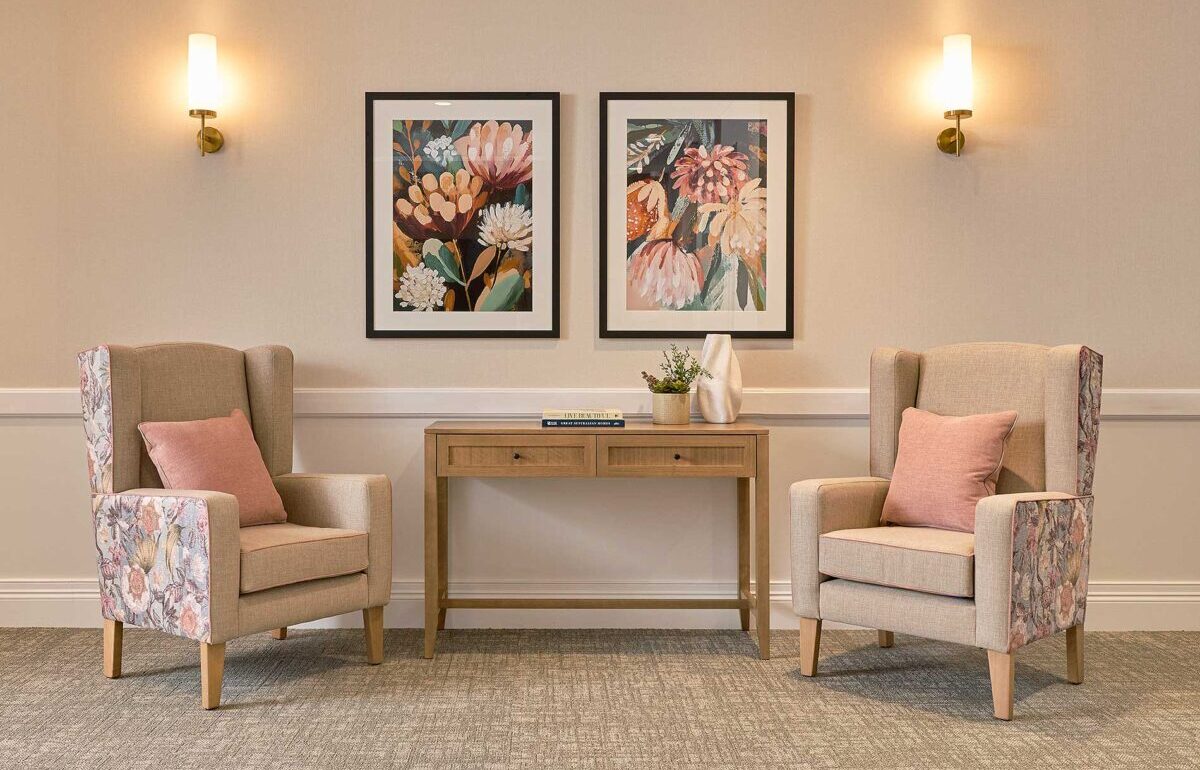
The Furniture Audit: 10 Questions Every Aged Care Facility Manager Should Ask
Is your aged care furniture still fit for purpose?
From dining chairs and lounge seating to bedroom furniture, the pieces residents use every day can influence their comfort, independence, safety and sense of belonging.
Yet furniture is often assessed only when something breaks, upholstery becomes visibly worn or a refurbishment is approaching.
A more proactive approach can help aged care facility managers identify potential risks, prioritise replacements and make better use of available budgets.
With Australia’s strengthened Aged Care Quality Standards in effect since 1 November 2025, there is good reason to take a closer look at the physical environment. Standard 4: The Environment places particular emphasis on safe, appropriate and well-maintained equipment, alongside clean, comfortable and accessible surroundings.
So, how does your facility’s furniture measure up?
These 10 questions provide a practical starting point for reviewing existing furniture and planning future purchases.
1. Can residents sit down and stand up safely and comfortably?
Consider how often residents move between sitting and standing throughout the day: at mealtimes, during activities, when receiving visitors or simply moving around their home.
A chair that is too low, too deep or excessively soft can make these everyday movements more difficult.
When reviewing seating, consider:
- Seat height: Is it appropriate for the people using the chair?
- Armrests: Are they stable, accessible and positioned to provide useful support?
- Seat firmness: Does the cushion provide support without excessive sinking?
- Seat depth: Can residents sit comfortably with their feet supported?
- Chair stability: Does the chair remain secure during normal use and transfers?
There is no single chair dimension suitable for every resident. Seating should reflect individual mobility, physical characteristics and care requirements, with occupational therapy input where appropriate.
Audit question: Are residents struggling to get in or out of particular chairs, and has this been raised with care staff or allied health professionals?
2. Is any furniture showing signs of instability or structural wear?
A chair may look presentable while concealing problems that affect its performance.
Loose joints, movement in the frame, damaged legs, weakened armrests and deteriorating cushioning can develop gradually, particularly in frequently used communal areas.
Inspect high-use furniture for:
- Movement or instability when weight is applied.
- Loose joints, fixings or damaged components.
- Cracked timber, bent metal or compromised frames.
- Sagging cushions or collapsed support.
- Sharp edges, exposed staples or damaged finishes.
Furniture with suspected structural defects should be assessed promptly and removed from use where necessary.
Audit question: When was the last time your facility systematically checked the structural condition of its chairs, lounges and tables?
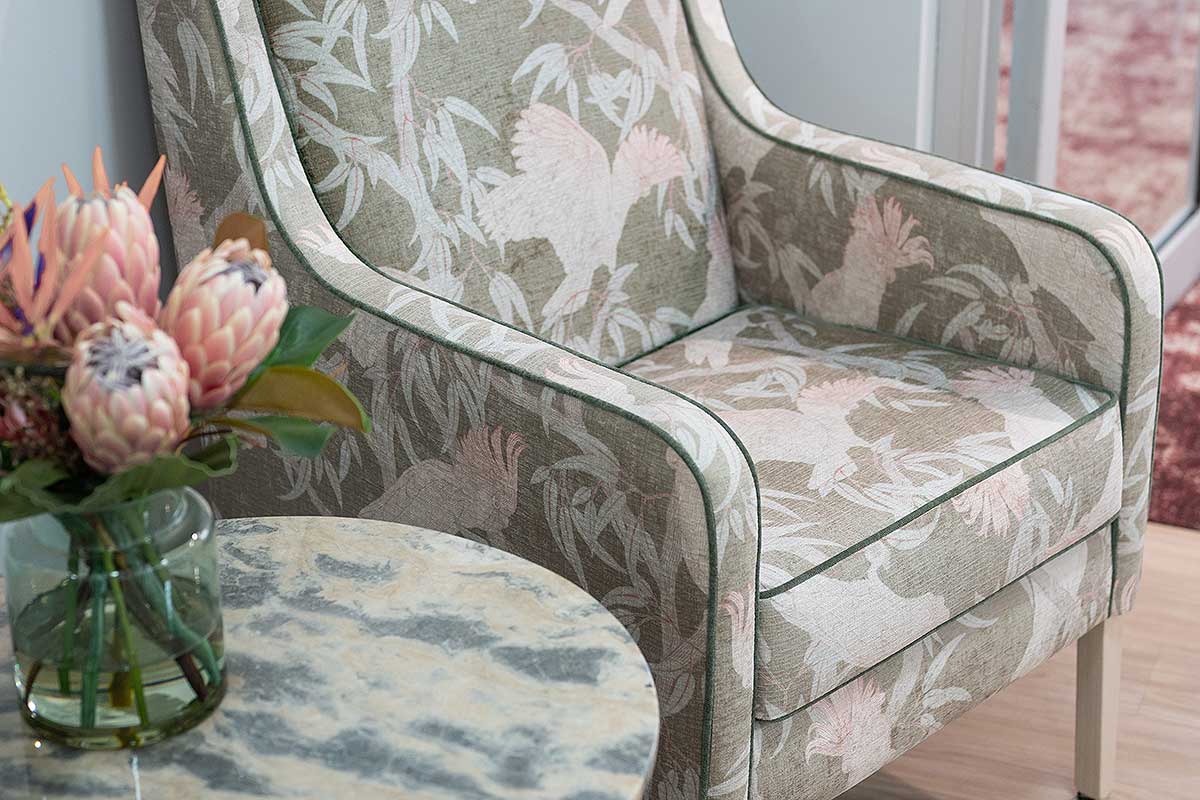
3. Can upholstery be cleaned and maintained effectively?
Aged care upholstery must balance comfort, appearance and practical cleaning requirements.
Spills, food residue, moisture and frequent cleaning can place considerable demands on fabrics, particularly in dining rooms, lounges and high-use communal spaces.
When assessing upholstered furniture, look beyond the fabric’s appearance.
Consider:
- Whether the upholstery is compatible with the facility’s cleaning and disinfection procedures.
- Whether stains and spills can be addressed promptly.
- Whether moisture can penetrate into the cushioning.
- Whether seams, joins and other construction details create difficult-to-clean areas.
- Whether the fabric has demonstrated durability for its intended application.
Performance textiles, including suitable Crypton-treated fabrics, can offer useful stain resistance and moisture protection. However, performance varies by product, and cleaning methods should always follow the manufacturer’s instructions.
No upholstery treatment replaces appropriate infection prevention and control procedures.
Audit question: Do your existing upholstery specifications support your facility’s cleaning requirements, or are some materials creating unnecessary maintenance challenges?
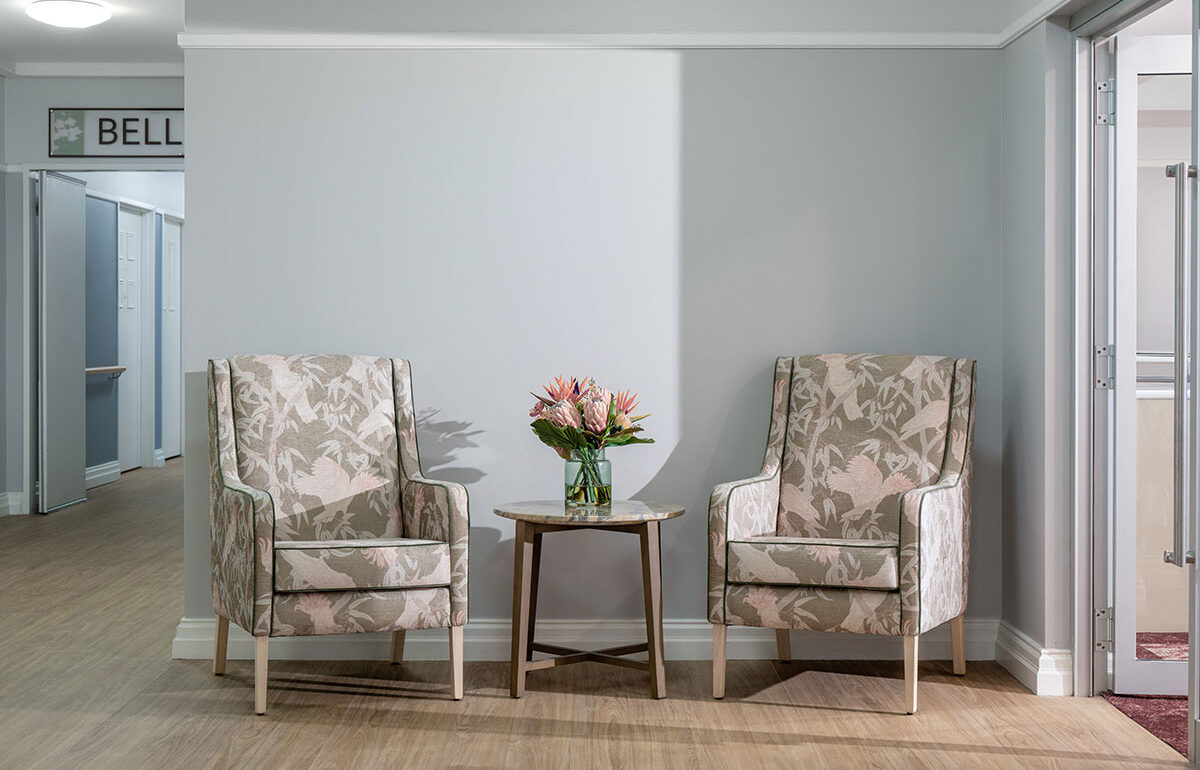
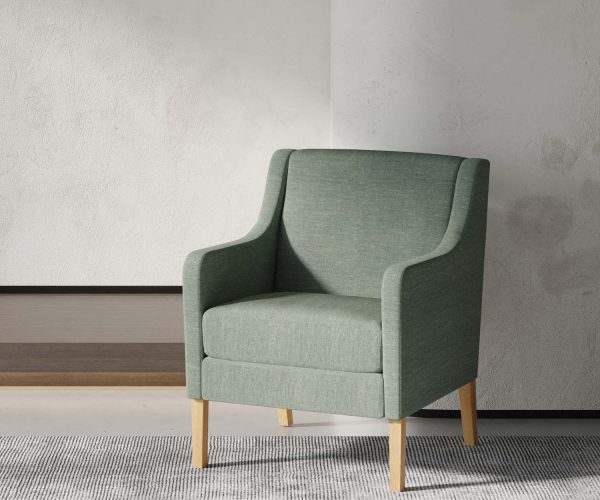
4. Does the furniture support residents living with dementia?
For residents living with dementia, the physical environment can influence orientation, comfort and the ability to participate in everyday activities.
Furniture selection is one element of creating a supportive, familiar and easy-to-navigate environment.
Consider whether:
- Seating is clearly distinguishable from surrounding flooring.
- Furniture arrangements make pathways and destinations easy to identify.
- Patterns, colours and finishes support rather than complicate visual perception.
- Familiar furniture styles contribute to a welcoming, residential atmosphere.
- Seating is available in locations where residents may benefit from resting.
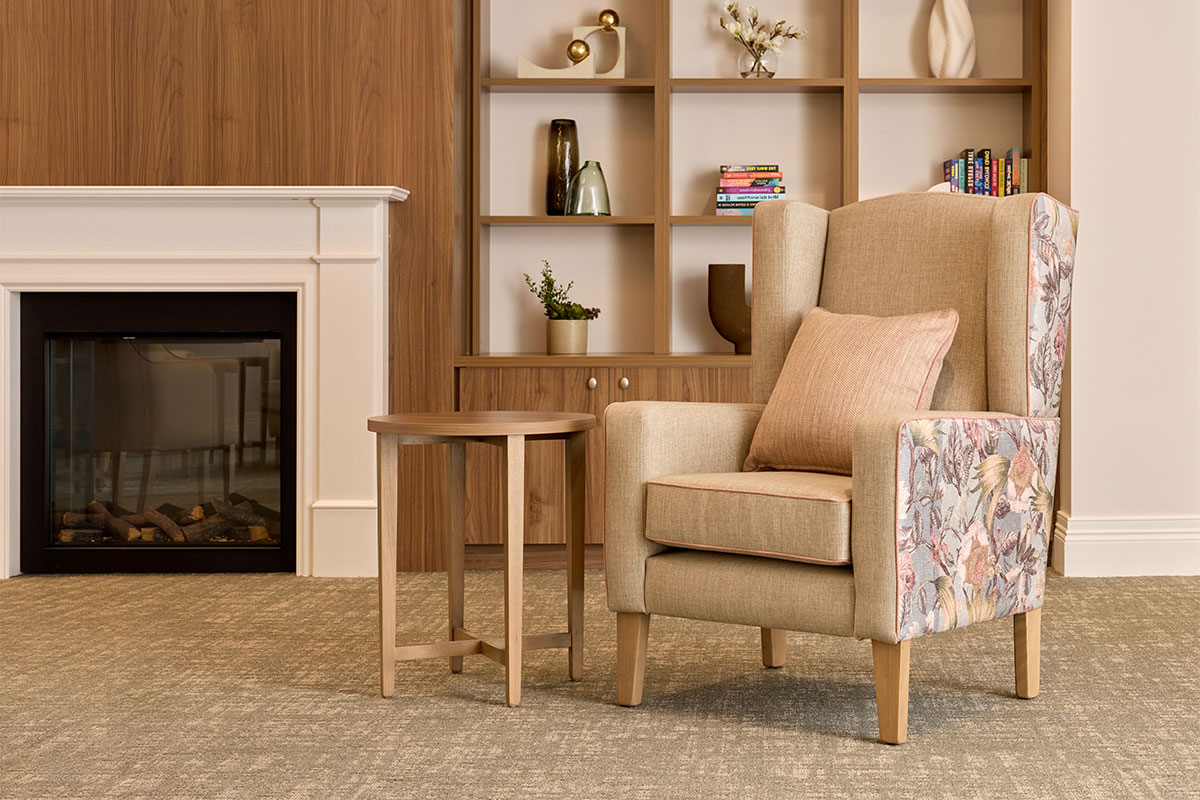
Contrast can be particularly useful. For example, a chair upholstered in a colour that is clearly distinguishable from the flooring may be easier to identify than one that visually blends into its surroundings.
However, dementia-friendly design is not simply about avoiding patterns or selecting particular colours. Residents have different preferences, abilities and responses to their environment.
Audit question: Does your furniture arrangement help residents recognise, navigate and comfortably use shared spaces?
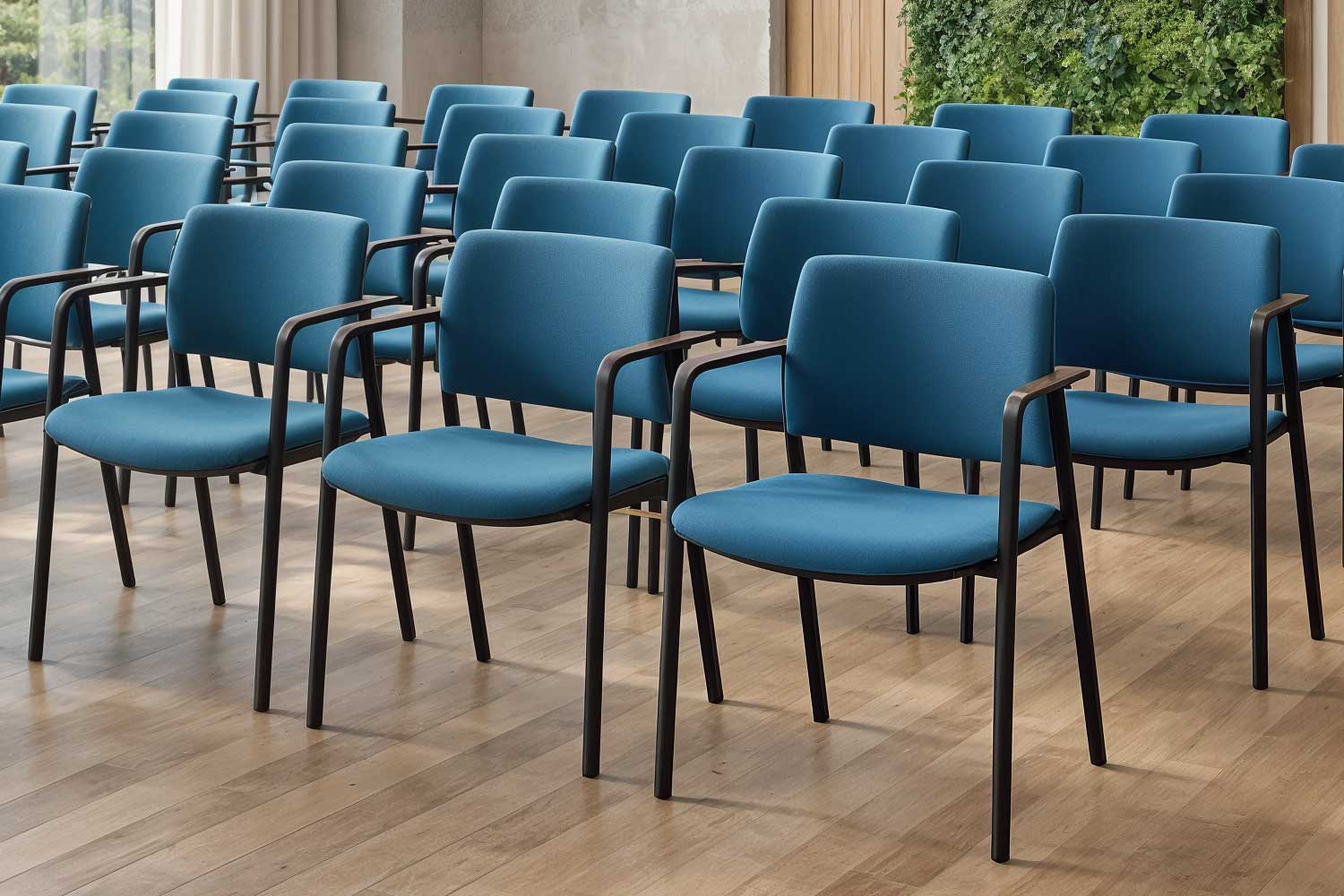
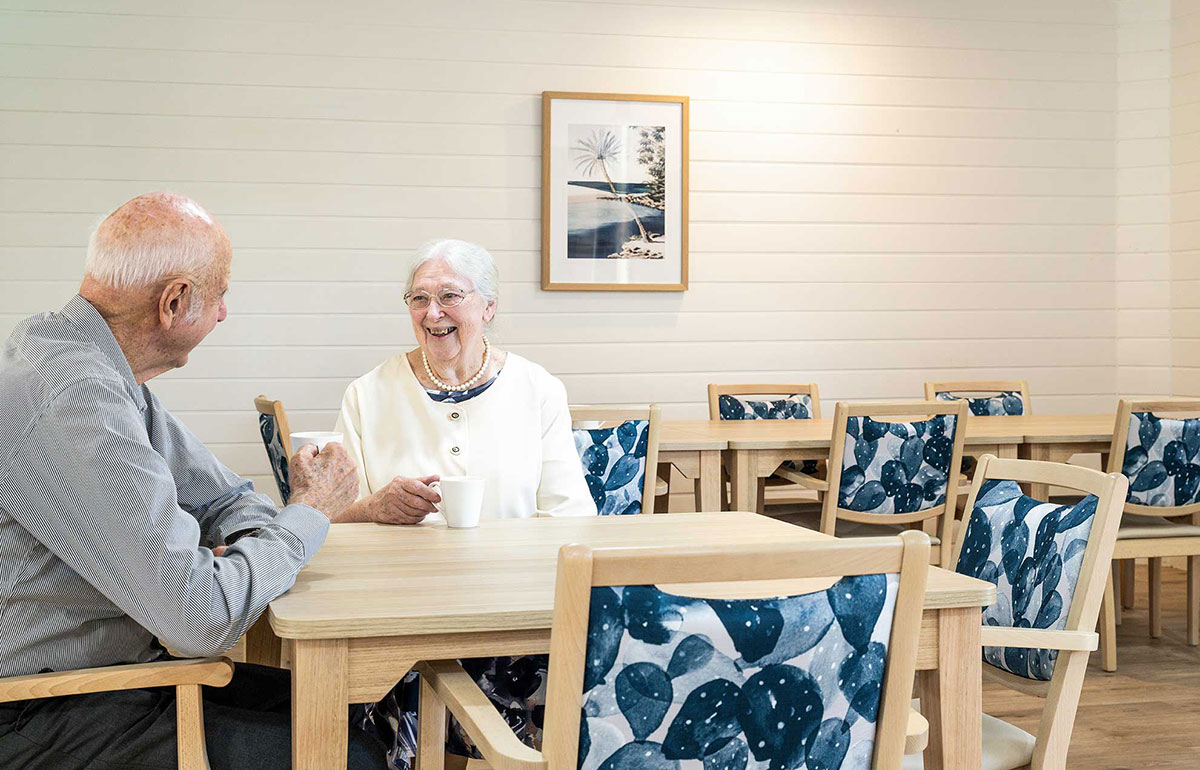
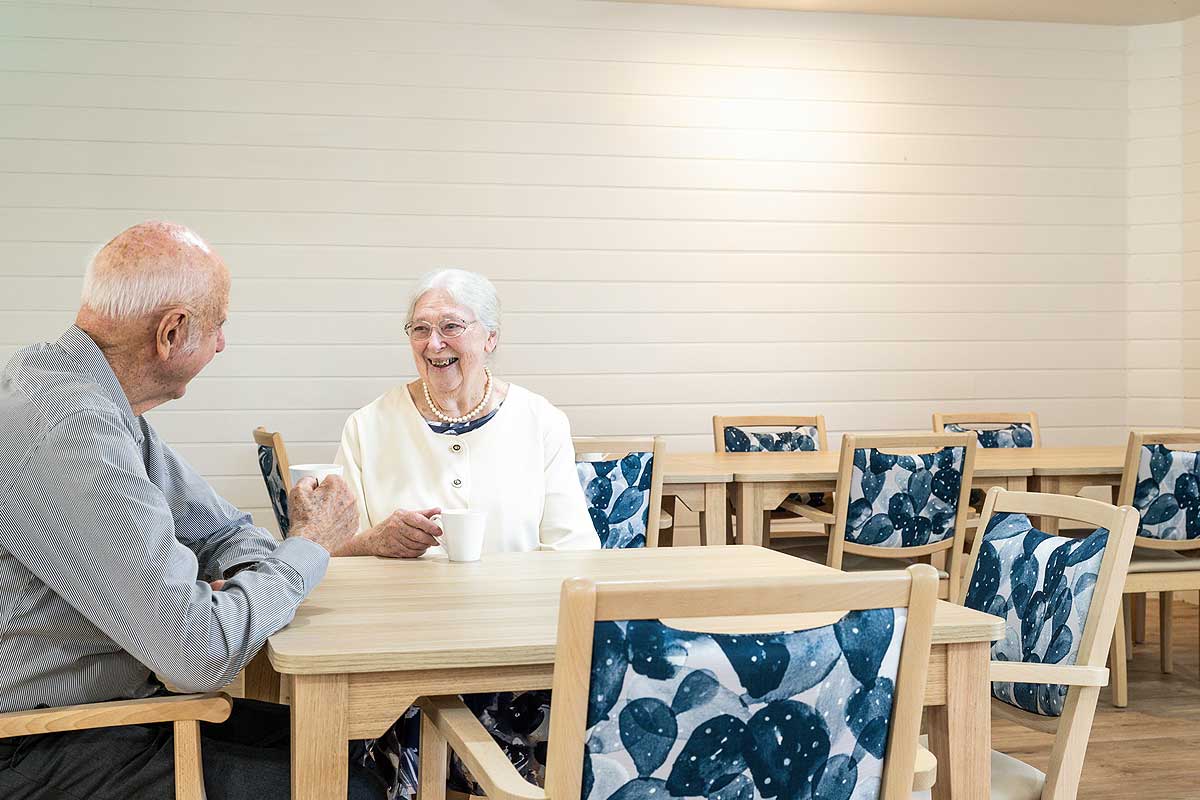
5. Are dining chairs and tables appropriate for the residents using them?
Dining furniture deserves particular attention because it is used repeatedly throughout the day.
Poorly matched chair and table dimensions can affect posture, comfort and access to meals.
Review whether:
- Residents can sit close enough to the table.
- Chair arms fit appropriately beneath or alongside the tabletop.
- Tables accommodate wheelchairs and other mobility requirements.
- Chairs are stable and manageable for staff to reposition.
- Upholstery and table surfaces can withstand frequent cleaning.
- Dining arrangements allow residents to socialise comfortably.
A dining room should be more than a functional place to serve meals. Its furniture can contribute to an enjoyable, welcoming experience that encourages participation and connection.
Audit question: Are your dining settings genuinely suitable for residents’ needs, or have residents and staff adapted their routines around unsuitable furniture?
6. Is furniture placement creating accessibility or movement challenges?
Even well-designed furniture can become problematic when positioned poorly.
Overcrowded lounges, narrow pathways, awkward furniture arrangements and insufficient circulation space can make movement more difficult for residents, visitors and staff.
Walk through your facility and assess:
- Whether pathways remain clear for walking aids and wheelchairs.
- Whether residents can access preferred seating without unnecessary obstacles.
- Whether staff have adequate room to provide assistance.
- Whether furniture placement affects access to doors, bathrooms or shared facilities.
- Whether residents can move between communal spaces comfortably.
Review the environment during normal daily activities rather than only when rooms are tidy or unoccupied.
Audit question: Can residents move around your facility comfortably and independently wherever their individual abilities allow?
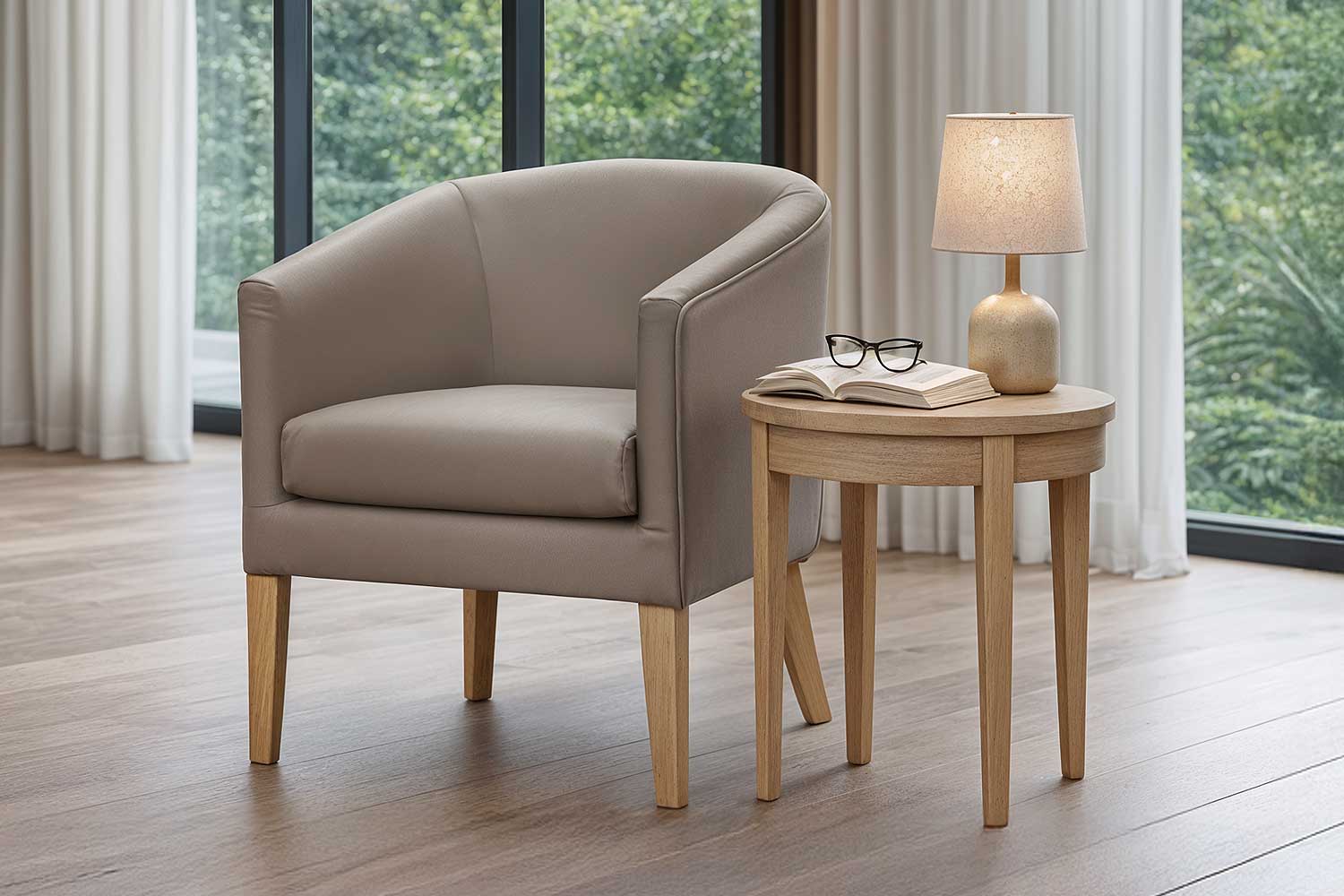
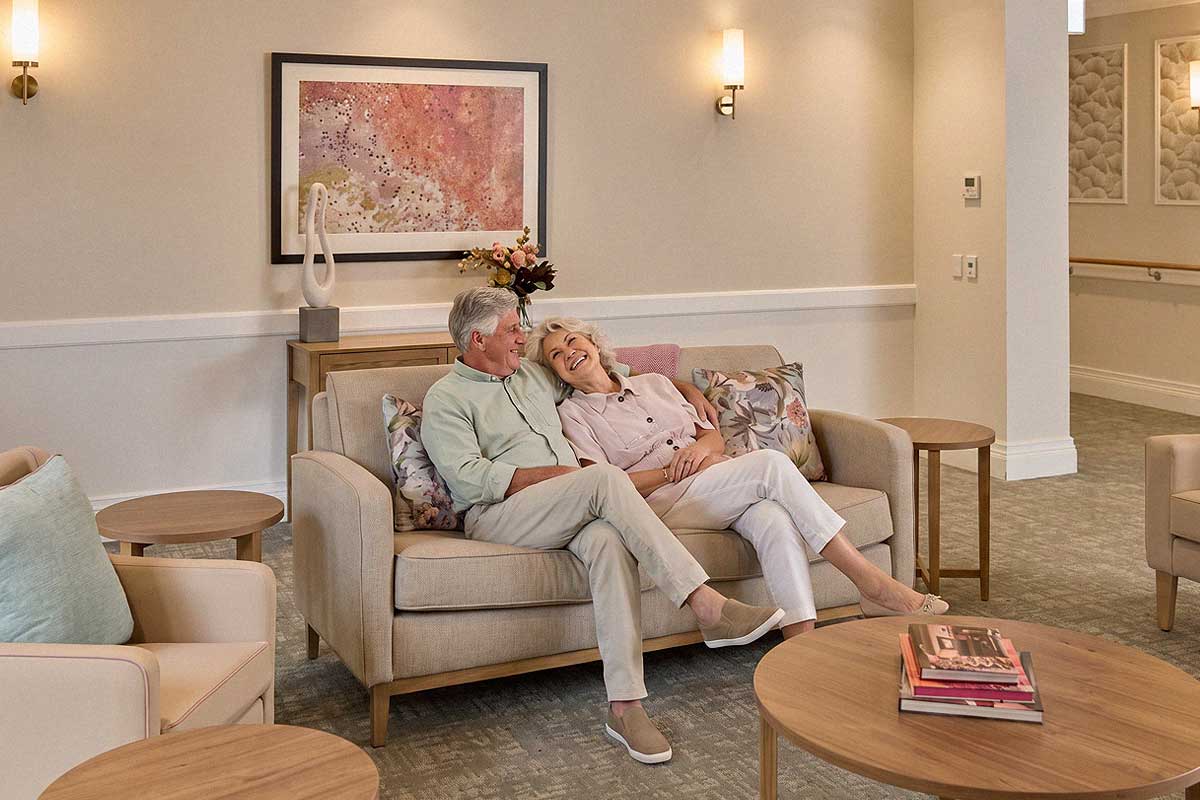
7. Does the furniture feel like home?
Residential aged care is, first and foremost, someone’s home.
Furniture should meet operational and care requirements without creating an unnecessarily institutional atmosphere.
The right combination of upholstery, timber finishes, colours and furniture styles can help establish spaces that feel welcoming and familiar.
Consider:
- Does the furniture complement the character of the facility?
- Are there different seating options for different preferences and activities?
- Do residents have opportunities to influence furniture choices?
- Are spaces comfortable for visiting family and friends?
- Does the furniture support both social interaction and quieter moments?
Commercial performance and residential aesthetics do not have to be competing priorities.
With appropriate materials and construction, aged care furniture can deliver the durability required for daily use while maintaining the warmth and character of a residential interior.
Audit question: If you were moving into the facility yourself, would the furniture make you feel at home?
8. Are you replacing furniture too frequently?
The lowest purchase price does not necessarily represent the best long-term value.
Furniture that requires frequent repairs, reupholstery or replacement can create additional costs over its working life.
When reviewing existing furniture, consider:
- How long each item has been in service.
- Whether particular furniture types regularly fail or deteriorate.
- The frequency and cost of repairs.
- Whether replacement parts or reupholstery are available.
- The manufacturer’s warranty and after-sales support.
- Whether the furniture was originally specified for commercial aged care use.
A lifecycle approach to procurement considers the total cost of ownership, not simply the initial purchase price.
Well-constructed furniture with replaceable upholstery and appropriate structural support may provide better value over time, depending on usage and maintenance.
Audit question: Do you know which furniture items are costing your facility the most to maintain or replace?
9. Do you have the information needed to make informed furniture decisions?
When furniture reaches the end of its useful life, facility managers may find that the original specifications are difficult to locate.
Without accurate product information, it becomes harder to assess suitability, compare replacements or maintain consistency across a facility.
Useful records may include:
- Manufacturer and product details.
- Dimensions and relevant weight capacity information.
- Frame construction and upholstery specifications.
- Cleaning and maintenance instructions.
- Warranty terms.
- Purchase and installation dates.
- Repair and replacement history.
Keeping this information accessible can simplify future purchasing decisions and support a more structured approach to asset management.
It can also help procurement teams communicate requirements more clearly to furniture suppliers.
Audit question: Could you readily identify the specifications and maintenance requirements of the furniture currently used throughout your facility?
10. Does your furniture still meet the changing needs of residents?
The needs of a residential aged care community can change over time.
A chair that was suitable when purchased may no longer be appropriate for the people using it today.
Changes in mobility, physical support requirements, cognitive needs and the way shared spaces are used may all influence furniture suitability.
A regular furniture review provides an opportunity to consider:
- Whether existing seating options accommodate a range of mobility needs.
- Whether additional supportive or specialised seating is required.
- Whether furniture arrangements still suit current activities and routines.
- Whether resident and staff feedback identifies recurring problems.
- Whether upcoming refurbishments offer opportunities to improve functionality.
Involving residents, care staff, occupational therapists, maintenance teams and procurement personnel can provide a more complete understanding of what is working and what needs attention.
Audit question: Is your furniture still suited to the people who use it today, rather than the people it was originally purchased for?
How Does Your Furniture Measure Up?
A furniture audit does not need to begin with a major refurbishment or a substantial budget.
Start with the areas that receive the most use, such as dining rooms, lounges and communal spaces.
Record any concerns, identify immediate safety issues and prioritise improvements based on risk, resident needs and operational requirements.
Your 10-Point Aged Care Furniture Audit Checklist
Use the following questions as a starting point for your next facility walk-through.
- Can residents sit down and stand up safely and comfortably?
- Is the furniture structurally sound and well maintained?
- Can upholstery be cleaned and maintained effectively?
- Does the furniture support residents living with dementia?
- Are dining chairs and tables appropriate for residents’ needs?
- Are pathways and shared spaces accessible?
- Does the furniture contribute to a welcoming, homelike environment?
- Are maintenance and replacement costs being monitored?
- Are furniture specifications and maintenance records accessible?
- Does the furniture continue to meet residents’ changing needs?
For each question, record whether the current furniture is satisfactory, needs review or requires action.
Prioritise immediate safety concerns, then develop a staged improvement plan for less urgent replacements and future procurement.
This checklist is a practical furniture assessment resource, not a formal compliance audit or substitute for professional clinical, occupational therapy or safety assessments.
Where Do the Aged Care Quality Standards Fit In?
Australia’s strengthened Aged Care Quality Standards, which commenced on 1 November 2025, reinforce the importance of environments that support residents’ safety, wellbeing and independence.
Standard 4: The Environment is particularly relevant to furniture assessment. It addresses safe and appropriate equipment, maintenance, accessibility, comfort and infection prevention and control.
Other standards provide useful context, including Standard 1: The Individual, which emphasises dignity, independence and choice, and Standard 7: The Residential Community, which recognises the importance of belonging and meaningful connection.
Furniture specification can support these broader objectives, but purchasing particular products does not, by itself, establish compliance with the Quality Standards.
For detailed regulatory guidance, refer to the Aged Care Quality and Safety Commission.
Better Furniture Decisions Start With Better Questions
An aged care furniture audit is an opportunity to look beyond appearance and assess how furniture performs in everyday life.
Is it safe? Is it comfortable? Can it be maintained? Does it support independence? And does it still meet the needs of the people who use it?
The answers can help facility managers make more informed decisions, whether replacing a handful of dining chairs or planning a complete refurbishment.
Planning a Furniture Review or Refurbishment?
At FHG Furniture, we work with aged care providers to develop furniture solutions that balance comfort, functionality, durability and residential design.
From individual furniture replacements to comprehensive fit-outs, our Project Consultants can help you assess your requirements, explore suitable options and plan for long-term use.
Talk to an FHG Project Consultant
Frequently Asked Questions
How often should aged care furniture be audited?
There is no single review interval suitable for every facility. Furniture should be inspected and maintained according to its use, condition, manufacturer recommendations and the facility’s risk management procedures. Regular scheduled reviews, together with prompt assessment of reported defects, can help identify issues before they become more serious.
What should be included in an aged care furniture audit?
A practical furniture audit should assess structural condition, seating suitability, accessibility, upholstery cleanability, maintenance requirements, resident comfort and ongoing fitness for purpose. It should also consider resident and staff feedback.
What furniture features are important for older people with reduced mobility?
Depending on individual needs, suitable seat height and depth, stable construction, supportive armrests and appropriately firm cushioning may assist with comfortable sitting and standing. Occupational therapists can help determine suitable furniture for residents with specific mobility or transfer requirements.
What upholstery is suitable for residential aged care?
Commercial-grade upholstery should be selected according to its intended use, durability, cleanability, moisture resistance and compatibility with the facility’s cleaning procedures. The complete furniture construction, including seams and cushioning, should also be considered.
Does aged care furniture need to comply with the strengthened Aged Care Quality Standards?
The strengthened Quality Standards establish obligations for relevant aged care providers, rather than a universal certification system for individual furniture products. Furniture and equipment used in care environments should be safe, appropriate and maintained to meet residents’ needs. Providers should assess furniture as part of their broader environmental safety and quality systems.
Recent Updates
The Furniture Audit: 10 Questions Every Aged Care Facility Manager Should Ask
Is your aged care furniture still fit for purpose?
From dining chairs and lounge seating to bedroom furniture, the pieces residents use every day can influence their comfort, independence, safety and sense of belonging.
Yet furniture is often assessed only when something breaks, upholstery becomes visibly worn or a refurbishment is approaching.
A more proactive approach can help aged care facility managers identify potential risks, prioritise replacements and make better use of available budgets.
With Australia’s strengthened Aged Care Quality Standards in effect since 1 November 2025, there is good reason to take a closer look at the physical environment. Standard 4: The Environment places particular emphasis on safe, appropriate and well-maintained equipment, alongside clean, comfortable and accessible surroundings.
So, how does your facility’s furniture measure up?
These 10 questions provide a practical starting point for reviewing existing furniture and planning future purchases.
1. Can residents sit down and stand up safely and comfortably?
Consider how often residents move between sitting and standing throughout the day: at mealtimes, during activities, when receiving visitors or simply moving around their home.
A chair that is too low, too deep or excessively soft can make these everyday movements more difficult.
When reviewing seating, consider:
- Seat height: Is it appropriate for the people using the chair?
- Armrests: Are they stable, accessible and positioned to provide useful support?
- Seat firmness: Does the cushion provide support without excessive sinking?
- Seat depth: Can residents sit comfortably with their feet supported?
- Chair stability: Does the chair remain secure during normal use and transfers?
There is no single chair dimension suitable for every resident. Seating should reflect individual mobility, physical characteristics and care requirements, with occupational therapy input where appropriate.
Audit question: Are residents struggling to get in or out of particular chairs, and has this been raised with care staff or allied health professionals?
2. Is any furniture showing signs of instability or structural wear?
A chair may look presentable while concealing problems that affect its performance.
Loose joints, movement in the frame, damaged legs, weakened armrests and deteriorating cushioning can develop gradually, particularly in frequently used communal areas.
Inspect high-use furniture for:
- Movement or instability when weight is applied.
- Loose joints, fixings or damaged components.
- Cracked timber, bent metal or compromised frames.
- Sagging cushions or collapsed support.
- Sharp edges, exposed staples or damaged finishes.
Furniture with suspected structural defects should be assessed promptly and removed from use where necessary.
Audit question: When was the last time your facility systematically checked the structural condition of its chairs, lounges and tables?
3. Can upholstery be cleaned and maintained effectively?
Aged care upholstery must balance comfort, appearance and practical cleaning requirements.
Spills, food residue, moisture and frequent cleaning can place considerable demands on fabrics, particularly in dining rooms, lounges and high-use communal spaces.
When assessing upholstered furniture, look beyond the fabric’s appearance.
Consider:
- Whether the upholstery is compatible with the facility’s cleaning and disinfection procedures.
- Whether stains and spills can be addressed promptly.
- Whether moisture can penetrate into the cushioning.
- Whether seams, joins and other construction details create difficult-to-clean areas.
- Whether the fabric has demonstrated durability for its intended application.
Performance textiles, including suitable Crypton-treated fabrics, can offer useful stain resistance and moisture protection. However, performance varies by product, and cleaning methods should always follow the manufacturer’s instructions.
No upholstery treatment replaces appropriate infection prevention and control procedures.
Audit question: Do your existing upholstery specifications support your facility’s cleaning requirements, or are some materials creating unnecessary maintenance challenges?
4. Does the furniture support residents living with dementia?
For residents living with dementia, the physical environment can influence orientation, comfort and the ability to participate in everyday activities.
Furniture selection is one element of creating a supportive, familiar and easy-to-navigate environment.
Consider whether:
- Seating is clearly distinguishable from surrounding flooring.
- Furniture arrangements make pathways and destinations easy to identify.
- Patterns, colours and finishes support rather than complicate visual perception.
- Familiar furniture styles contribute to a welcoming, residential atmosphere.
- Seating is available in locations where residents may benefit from resting.
Contrast can be particularly useful. For example, a chair upholstered in a colour that is clearly distinguishable from the flooring may be easier to identify than one that visually blends into its surroundings.
However, dementia-friendly design is not simply about avoiding patterns or selecting particular colours. Residents have different preferences, abilities and responses to their environment.
Audit question: Does your furniture arrangement help residents recognise, navigate and comfortably use shared spaces?
5. Are dining chairs and tables appropriate for the residents using them?
Dining furniture deserves particular attention because it is used repeatedly throughout the day.
Poorly matched chair and table dimensions can affect posture, comfort and access to meals.
Review whether:
- Residents can sit close enough to the table.
- Chair arms fit appropriately beneath or alongside the tabletop.
- Tables accommodate wheelchairs and other mobility requirements.
- Chairs are stable and manageable for staff to reposition.
- Upholstery and table surfaces can withstand frequent cleaning.
- Dining arrangements allow residents to socialise comfortably.
A dining room should be more than a functional place to serve meals. Its furniture can contribute to an enjoyable, welcoming experience that encourages participation and connection.
Audit question: Are your dining settings genuinely suitable for residents’ needs, or have residents and staff adapted their routines around unsuitable furniture?
6. Is furniture placement creating accessibility or movement challenges?
Even well-designed furniture can become problematic when positioned poorly.
Overcrowded lounges, narrow pathways, awkward furniture arrangements and insufficient circulation space can make movement more difficult for residents, visitors and staff.
Walk through your facility and assess:
- Whether pathways remain clear for walking aids and wheelchairs.
- Whether residents can access preferred seating without unnecessary obstacles.
- Whether staff have adequate room to provide assistance.
- Whether furniture placement affects access to doors, bathrooms or shared facilities.
- Whether residents can move between communal spaces comfortably.
Review the environment during normal daily activities rather than only when rooms are tidy or unoccupied.
Audit question: Can residents move around your facility comfortably and independently wherever their individual abilities allow?
7. Does the furniture feel like home?
Residential aged care is, first and foremost, someone’s home.
Furniture should meet operational and care requirements without creating an unnecessarily institutional atmosphere.
The right combination of upholstery, timber finishes, colours and furniture styles can help establish spaces that feel welcoming and familiar.
Consider:
- Does the furniture complement the character of the facility?
- Are there different seating options for different preferences and activities?
- Do residents have opportunities to influence furniture choices?
- Are spaces comfortable for visiting family and friends?
- Does the furniture support both social interaction and quieter moments?
Commercial performance and residential aesthetics do not have to be competing priorities.
With appropriate materials and construction, aged care furniture can deliver the durability required for daily use while maintaining the warmth and character of a residential interior.
Audit question: If you were moving into the facility yourself, would the furniture make you feel at home?
8. Are you replacing furniture too frequently?
The lowest purchase price does not necessarily represent the best long-term value.
Furniture that requires frequent repairs, reupholstery or replacement can create additional costs over its working life.
When reviewing existing furniture, consider:
- How long each item has been in service.
- Whether particular furniture types regularly fail or deteriorate.
- The frequency and cost of repairs.
- Whether replacement parts or reupholstery are available.
- The manufacturer’s warranty and after-sales support.
- Whether the furniture was originally specified for commercial aged care use.
A lifecycle approach to procurement considers the total cost of ownership, not simply the initial purchase price.
Well-constructed furniture with replaceable upholstery and appropriate structural support may provide better value over time, depending on usage and maintenance.
Audit question: Do you know which furniture items are costing your facility the most to maintain or replace?
9. Do you have the information needed to make informed furniture decisions?
When furniture reaches the end of its useful life, facility managers may find that the original specifications are difficult to locate.
Without accurate product information, it becomes harder to assess suitability, compare replacements or maintain consistency across a facility.
Useful records may include:
- Manufacturer and product details.
- Dimensions and relevant weight capacity information.
- Frame construction and upholstery specifications.
- Cleaning and maintenance instructions.
- Warranty terms.
- Purchase and installation dates.
- Repair and replacement history.
Keeping this information accessible can simplify future purchasing decisions and support a more structured approach to asset management.
It can also help procurement teams communicate requirements more clearly to furniture suppliers.
Audit question: Could you readily identify the specifications and maintenance requirements of the furniture currently used throughout your facility?
10. Does your furniture still meet the changing needs of residents?
The needs of a residential aged care community can change over time.
A chair that was suitable when purchased may no longer be appropriate for the people using it today.
Changes in mobility, physical support requirements, cognitive needs and the way shared spaces are used may all influence furniture suitability.
A regular furniture review provides an opportunity to consider:
- Whether existing seating options accommodate a range of mobility needs.
- Whether additional supportive or specialised seating is required.
- Whether furniture arrangements still suit current activities and routines.
- Whether resident and staff feedback identifies recurring problems.
- Whether upcoming refurbishments offer opportunities to improve functionality.
Involving residents, care staff, occupational therapists, maintenance teams and procurement personnel can provide a more complete understanding of what is working and what needs attention.
Audit question: Is your furniture still suited to the people who use it today, rather than the people it was originally purchased for?
How Does Your Furniture Measure Up?
A furniture audit does not need to begin with a major refurbishment or a substantial budget.
Start with the areas that receive the most use, such as dining rooms, lounges and communal spaces.
Record any concerns, identify immediate safety issues and prioritise improvements based on risk, resident needs and operational requirements.
Your 10-Point Aged Care Furniture Audit Checklist
Use the following questions as a starting point for your next facility walk-through.
- Can residents sit down and stand up safely and comfortably?
- Is the furniture structurally sound and well maintained?
- Can upholstery be cleaned and maintained effectively?
- Does the furniture support residents living with dementia?
- Are dining chairs and tables appropriate for residents’ needs?
- Are pathways and shared spaces accessible?
- Does the furniture contribute to a welcoming, homelike environment?
- Are maintenance and replacement costs being monitored?
- Are furniture specifications and maintenance records accessible?
- Does the furniture continue to meet residents’ changing needs?
For each question, record whether the current furniture is satisfactory, needs review or requires action.
Prioritise immediate safety concerns, then develop a staged improvement plan for less urgent replacements and future procurement.
This checklist is a practical furniture assessment resource, not a formal compliance audit or substitute for professional clinical, occupational therapy or safety assessments.
Where Do the Aged Care Quality Standards Fit In?
Australia’s strengthened Aged Care Quality Standards, which commenced on 1 November 2025, reinforce the importance of environments that support residents’ safety, wellbeing and independence.
Standard 4: The Environment is particularly relevant to furniture assessment. It addresses safe and appropriate equipment, maintenance, accessibility, comfort and infection prevention and control.
Other standards provide useful context, including Standard 1: The Individual, which emphasises dignity, independence and choice, and Standard 7: The Residential Community, which recognises the importance of belonging and meaningful connection.
Furniture specification can support these broader objectives, but purchasing particular products does not, by itself, establish compliance with the Quality Standards.
For detailed regulatory guidance, refer to the Aged Care Quality and Safety Commission.
Better Furniture Decisions Start With Better Questions
An aged care furniture audit is an opportunity to look beyond appearance and assess how furniture performs in everyday life.
Is it safe? Is it comfortable? Can it be maintained? Does it support independence? And does it still meet the needs of the people who use it?
The answers can help facility managers make more informed decisions, whether replacing a handful of dining chairs or planning a complete refurbishment.
Planning a Furniture Review or Refurbishment?
At FHG Furniture, we work with aged care providers to develop furniture solutions that balance comfort, functionality, durability and residential design.
From individual furniture replacements to comprehensive fit-outs, our Project Consultants can help you assess your requirements, explore suitable options and plan for long-term use.
Talk to an FHG Project Consultant
Frequently Asked Questions
How often should aged care furniture be audited?
There is no single review interval suitable for every facility. Furniture should be inspected and maintained according to its use, condition, manufacturer recommendations and the facility’s risk management procedures. Regular scheduled reviews, together with prompt assessment of reported defects, can help identify issues before they become more serious.
What should be included in an aged care furniture audit?
A practical furniture audit should assess structural condition, seating suitability, accessibility, upholstery cleanability, maintenance requirements, resident comfort and ongoing fitness for purpose. It should also consider resident and staff feedback.
What furniture features are important for older people with reduced mobility?
Depending on individual needs, suitable seat height and depth, stable construction, supportive armrests and appropriately firm cushioning may assist with comfortable sitting and standing. Occupational therapists can help determine suitable furniture for residents with specific mobility or transfer requirements.
What upholstery is suitable for residential aged care?
Commercial-grade upholstery should be selected according to its intended use, durability, cleanability, moisture resistance and compatibility with the facility’s cleaning procedures. The complete furniture construction, including seams and cushioning, should also be considered.
Does aged care furniture need to comply with the strengthened Aged Care Quality Standards?
The strengthened Quality Standards establish obligations for relevant aged care providers, rather than a universal certification system for individual furniture products. Furniture and equipment used in care environments should be safe, appropriate and maintained to meet residents’ needs. Providers should assess furniture as part of their broader environmental safety and quality systems.